
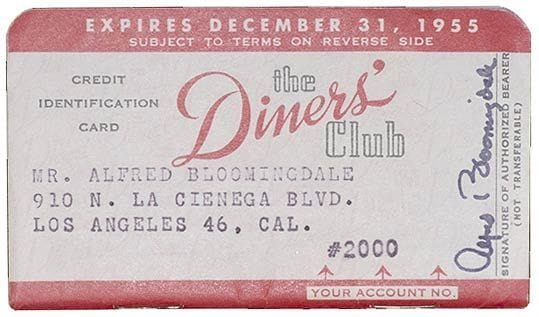
The story of how the credit card was invented is one of the most repeated origin myths in business history. A businessman named Frank McNamara forgets his wallet at a fancy New York restaurant in 1949, is humiliated when he can't pay the bill, and vows to create a universal payment card so it never happens again. It's a clean, relatable story. It was also largely invented by a PR man named Matty Simmons, who later admitted he'd fabricated the details to make the founding of Diners Club sound more dramatic. The real origin is less cinematic — but what happened next is far more consequential.
What McNamara and his partners actually created in 1950 was a charge card, not a credit card — and the distinction matters enormously. The Diners Club card required members to pay their full balance at the end of every month, no exceptions. There was no revolving credit, no minimum payment, no interest accumulating in the background. You spent what you could pay back. The card started with 200 members and acceptance at 14 New York restaurants. Within a year it had 42,000 members.
The concept spread fast. American Express launched its own charge card in 1958. Bank of America followed the same year with a card called BankAmericard — which would eventually become Visa. But Bank of America introduced something Diners Club hadn't: revolving credit. Instead of requiring full payment each month, BankAmericard let customers carry a balance forward and pay it off gradually — with interest. It was presented as a consumer convenience. It was also the foundational mechanism of one of the most profitable financial products ever invented.
The mathematics of revolving credit are straightforward and almost universally misunderstood at the point of use. A $3,000 balance on a card charging 20% annual interest, paid off at the minimum payment rate, takes over 14 years to clear and costs more than $3,000 in interest alone — meaning the consumer pays more than double the original purchase price. The card companies know this. The minimum payment is calculated specifically to maximize interest revenue while keeping the monthly charge low enough that cardholders continue using the card.
By the 1970s and 80s, the pay-in-full model that McNamara had built Diners Club around was a minority position in the industry. Revolving credit had become the standard, and the regulatory environment had shifted decisively in favor of card issuers. A 1978 Supreme Court ruling allowed banks to charge the interest rates of their home state to customers anywhere in the country — which is why so many credit card companies incorporated in Delaware and South Dakota, states that had eliminated interest rate caps entirely.
Today the credit card industry generates roughly $130 billion annually in interest and fee revenue in the United States alone. The average American household carries over $6,000 in credit card debt. The total outstanding credit card balance in the U.S. currently sits above $1.1 trillion — a number that has never been higher. The product that was originally designed around the principle of paying what you owe, in full, every month, has become one of the primary mechanisms through which American consumers fall behind financially.
Frank McNamara sold his stake in Diners Club in 1952 for $200,000. He died the following year at 40 years old, before the industry he accidentally launched had fully taken shape. The card he built — the one that required you to pay your balance in full, that treated credit as a convenience rather than a product — still exists in a modified form. But it's a niche offering in a market now worth $9 trillion globally, built on a model he never intended and didn't live to see.