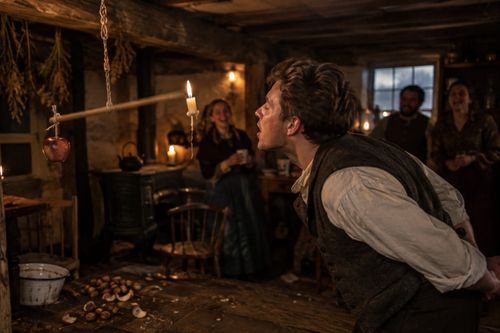
Claim A says Percepto seats ran on motors from WWI tank engines. Claim B says Percepto seats buzzed moviegoers but never shocked them. Claim B is true, and Claim A is completely made up.
In 1959, showman William Castle wanted audiences to feel his movie The Tingler, not just watch it. His solution was a gimmick he called Percepto.
Castle bought war-surplus motorized vibration devices originally built to de-ice aircraft wings. Rigged under theater seats, they delivered a mild, ticklish buzz. They were installed on roughly one in ten seats in the bigger theaters on the circuit, and equipping an average theater reportedly took about four hours.
The cue came on screen. As Vincent Price warned the audience to "scream for your lives!", the projectionist flipped the switch and the lucky seats began to tingle. Castle later boasted that he had buzzed over 20,000,000 behinds, though that number is his own estimate.
The film added even more theatrics. The picture appeared to break, a silhouette of the monster crossed the projector beam, and a planted woman was carried out by phony nurses as if she had fainted. A popular legend says Percepto electrocuted viewers, but that story comes from an error in Castle's own autobiography. The seats vibrated; they did not shock.
As for Claim A, the motors had nothing to do with World War I tanks. They were de-icing devices made for airplane wings.
Think you'd have screamed along? Share this with a friend who still believes the shock story.