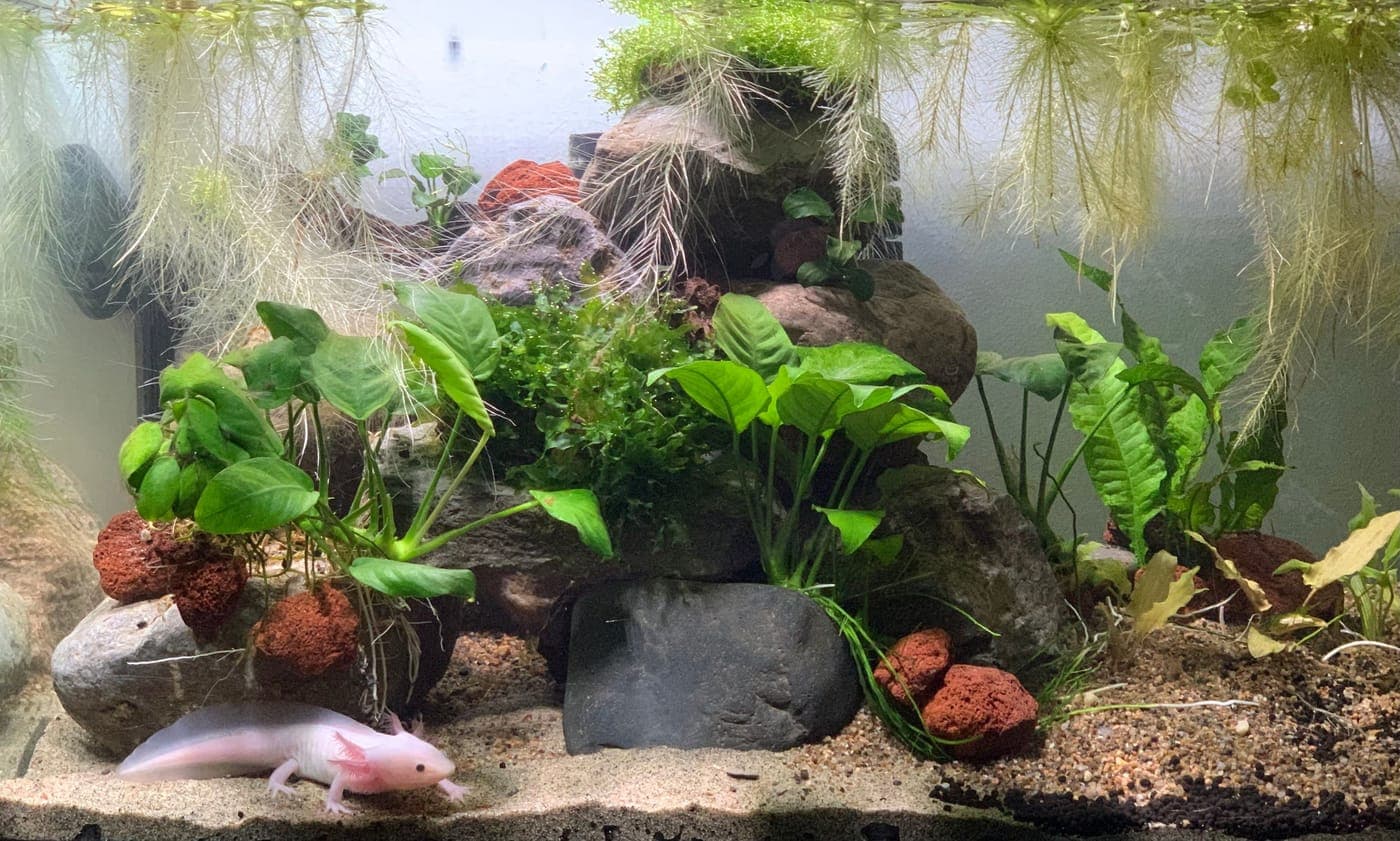
There is a creature living in a single lake outside Mexico City that can regrow its own brain. Not approximately. Not partially. Completely — with zero scarring, zero loss of function, and no trace that anything was ever damaged. Scientists have been studying axolotls for over a century, and the more they understand, the less they can explain.
The axolotl is a salamander that never fully undergoes metamorphosis — it stays in its juvenile aquatic form its entire life, keeping its feathery external gills and an extraordinary biological toolkit that no other vertebrate on Earth possesses. It can regenerate entire limbs, its heart, its spinal cord after complete severing, and significant portions of its brain — with full function restored. In most animals, brain injury is permanent. Neurons don't grow back. Scar tissue forms. In the axolotl, the brain treats injury the same way it treats normal development.
The mechanism is called dedifferentiation. When injured, mature cells near the wound don't scar over — they reverse course, un-becoming the specialized cells they were and reverting to a primitive stem-cell-like state. From there, they rebuild into whatever cell type the repair requires. It's biological time travel at the cellular level, and nothing else in vertebrate biology works this way.
NASA has taken a direct interest in axolotl research, studying their regenerative mechanisms as part of broader research into how biological systems recover from damage in extreme environments, including the cellular stress of spaceflight. If scientists could replicate the molecular signals that trigger dedifferentiation, the implications for treating human brain and spinal injuries would be staggering.
Here's the tragic irony: axolotls exist naturally in only one place on Earth — Lake Xochimilco, a shrinking network of canals on the outskirts of Mexico City. Pollution, urban development, and invasive species have pushed them to the edge of extinction in the wild. Conservation teams now conduct regular surveys of the lake and frequently come back having found none at all.
Science is still decades away from translating axolotl biology into human therapies. But the axolotl has already done something that changed the field entirely: it proved that complete neural regeneration is biologically possible. For a field that had long assumed damaged brains were permanently damaged, that proof alone was everything.