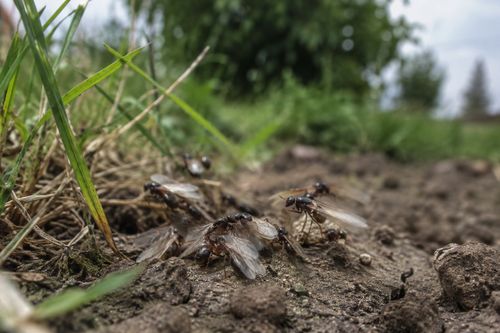
When floodwaters rise, most colonies would scatter or drown. Fire ants do something else entirely, and it looks almost too coordinated to be instinct rather than planning.
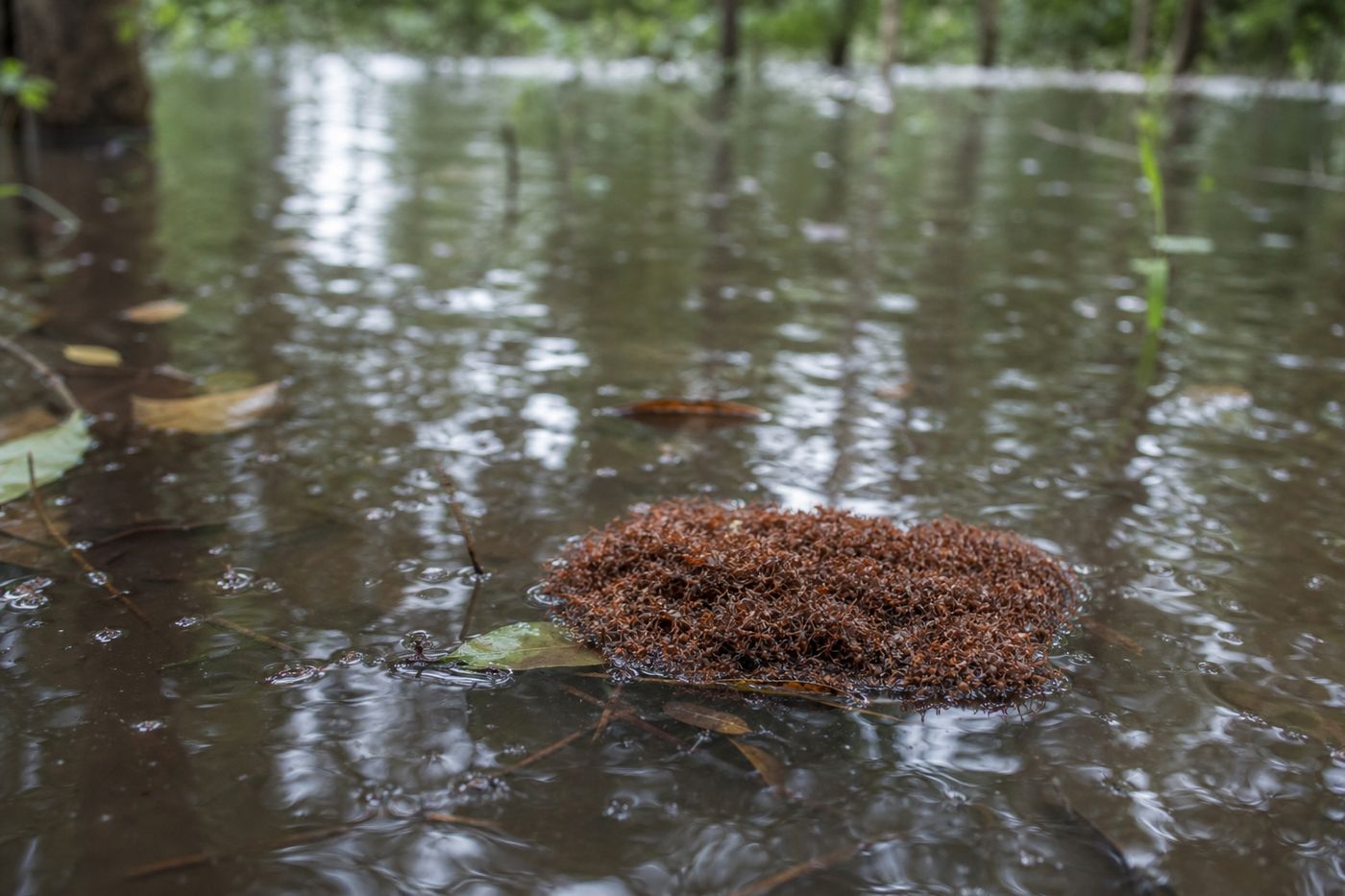
Within minutes of sensing rising water, thousands of ants link their legs and jaws together, forming a single interlocking mass. The resulting structure floats on the surface for weeks without a single ant drowning.
Researchers at Georgia Tech studied these rafts and found they behave less like a pile of insects and more like a fluid material. The ants continuously rotate positions, so no individual stays submerged long enough to die.
The ants on the bottom layer actually trap air bubbles in the tiny hairs covering their bodies. This trapped air keeps the entire raft buoyant, even when it's carrying the queen, eggs, and larvae on top.
What makes this stranger is the timeline involved. Colonies can maintain these living rafts for up to twelve days, drifting until they bump into a tree, a wall, or dry land.
Scientists have since used these rafts as a model for building self-healing materials. The ants demonstrate real-time engineering, adjusting the raft's shape depending on water current and wind.
A colony with no boats, no bridges, and no blueprints ends up building both, using nothing but its own bodies as construction material.