Spiders have been found on ships in the middle of the ocean. They've been collected by aircraft flying more than two miles above the ground. For centuries, scientists assumed they knew how — the spiders were simply catching the wind, parachuting on silk threads like tiny, eight-legged paratroopers. They were completely wrong.
The real explanation is stranger. Spiders aren't riding the wind at all. They're harnessing electricity.
The phenomenon is called ballooning, and it's been observed for centuries — Charles Darwin noted it on the HMS Beagle when spiders mysteriously landed on the ship 60 miles from shore. But it wasn't until 2018 that researchers at the University of Bristol confirmed the actual mechanism: spiders detect and exploit the Earth's atmospheric electric field to launch themselves into the air.
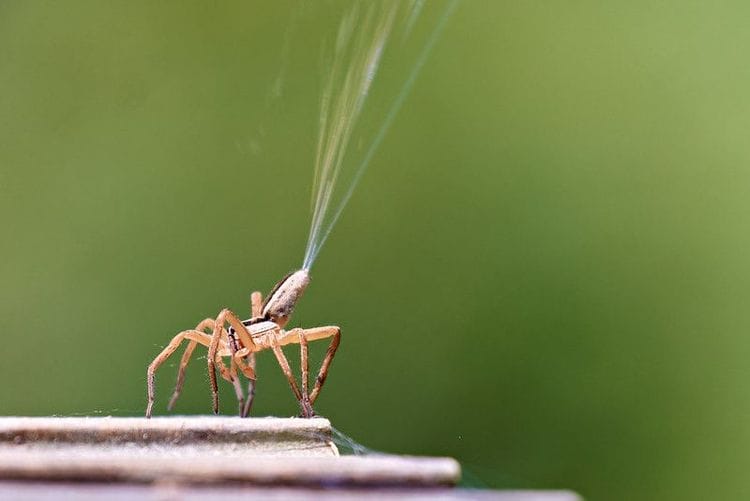
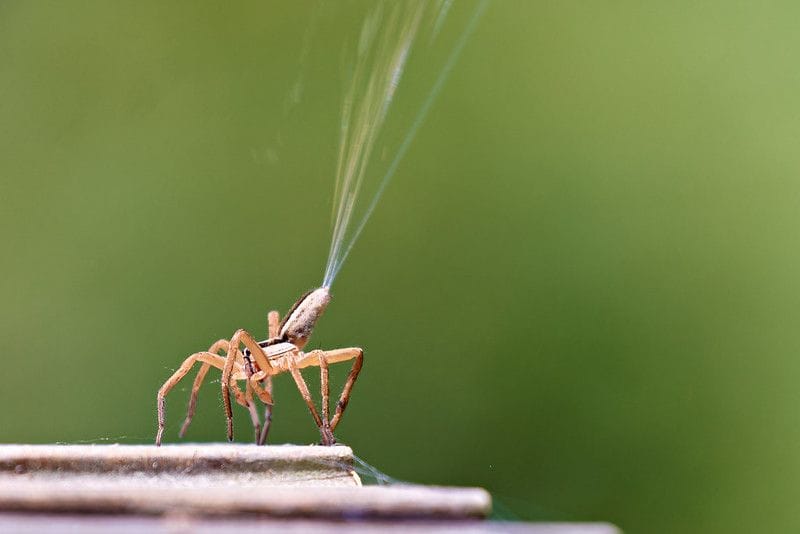
Here's how it works. The Earth's surface carries a negative charge, while the atmosphere above it carries a positive one. When a spider releases silk into the air, the strands pick up an electrostatic charge that interacts with this field — creating a repulsive force strong enough to lift the spider upward, even against gravity, even on completely still days with no wind at all.
To test this, researchers placed spiders in sealed chambers with no airflow and then manipulated the electric field inside. The spiders responded immediately — raising their legs, releasing silk, and lifting off when the field was switched on. When it was switched off, they descended. It was controlled, repeatable, and completely windless.
What makes this even more remarkable is that spiders appear to sense the strength of the electric field before launching — essentially checking conditions before takeoff. They'll wait for optimal field strength, then release precisely calibrated amounts of silk. They can also pull their silk back in mid-flight to descend when they've reached their destination.
This discovery reframes something scientists thought they understood. It also explains one of the more puzzling facts in ecology: spiders are consistently among the very first creatures to colonize new volcanic islands, sometimes arriving within weeks of the land emerging from the ocean. They don't wait for a bridge. They fly — electrically — across open water.
The atmosphere is full of things moving through it that we never see. Spiders have been quietly mastering electrical flight for millions of years — and science is only now catching up to what they figured out long ago.