




Every December, families gather around a decorated evergreen tree as the centerpiece of Christmas celebration. But this tradition didn't originate with Christianity—it came from ancient Germanic tribes who decorated trees as offerings to Odin, the Norse god of war and wisdom.
During the winter solstice, Germanic tribes believed Odin would ride through the sky on his eight-legged horse Sleipnir, leading the "Wild Hunt"—a ghostly procession of spirits. To honor him and ensure his favor, they would select large evergreen trees in the forest and decorate them with offerings.
They hung fruits, nuts, and small carved figures on the branches, and sometimes placed candles or torches near the tree to light Odin's way. The evergreen tree itself was sacred because it stayed alive and green through the harsh winter when everything else died.
The logic was straightforward: if Odin saw your decorated tree and offerings, he might bless your household with prosperity, protection, and a successful spring planting season. If you didn't honor him, you risked his wrath—or worse, being ignored and left vulnerable to misfortune.
When Christianity spread through Northern Europe, church leaders tried to eliminate these pagan tree worship practices. They denounced the tradition as devil worship and attempted to ban decorating trees entirely. It didn't work.
The tradition was too deeply embedded in Germanic culture. So instead of fighting it, Christians did what they always did with stubborn pagan practices—they co-opted it and slapped Christian meaning on top.
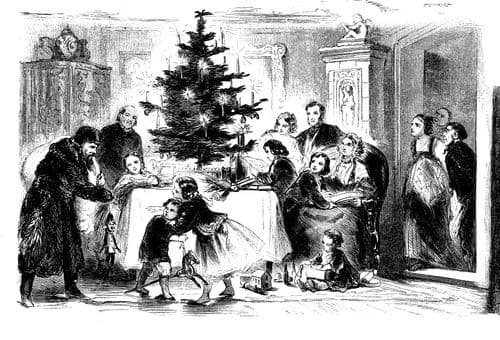
By the 16th century, German Christians were bringing evergreen trees into their homes and decorating them for Christmas. They claimed the triangular shape of the tree represented the Holy Trinity, the evergreen nature symbolized eternal life through Christ, and the star on top represented the Star of Bethlehem.
The practice spread slowly. Queen Victoria and Prince Albert popularized Christmas trees in England in the 1840s, and German immigrants brought the tradition to America around the same time. By the early 1900s, decorated Christmas trees had become standard in middle-class homes.
Today, over 25-30 million real Christmas trees are sold in the U.S. each year, and most families have no idea they're continuing a 2,000+ year old practice of decorating trees to honor a one-eyed Norse war god.
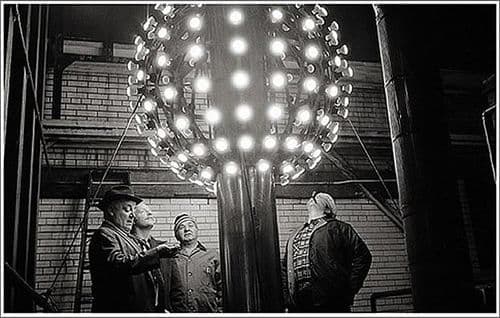
The wildest part? Some of the decorations haven't changed much. We still hang fruits, nuts, and figures on branches. We still put lights on trees like the ancient torches. We've just forgotten we're making offerings to Odin and convinced ourselves it's about celebrating Jesus's birth instead.