Fun Facts

Trending Now

Viagra Facts: A Heart Drug, Blue Vision and Hamsters

Viagra Facts: A Heart Drug, Blue Vision and Hamsters

Why Viagra began as a heart drug, how it can tint your vision blue and why the FAA cares, and the hamster jet lag study that won an Ig Nobel Prize.

Read more
Cannibalism: 3 True Stories You Won't Believe

Cannibalism: 3 True Stories You Won't Believe

Which state bans cannibalism, why the CDC warned about placenta pills, and how a tribe's funeral ritual may have left a gene that fights brain disease.

Read more
The Laughing Sickness That Shut Down Schools

The Laughing Sickness That Shut Down Schools

In 1962, three schoolgirls started laughing and a whole region couldn't stop. Nobody was joking.

Read more
The Surprising Origin of the Movie Trailer

The Surprising Origin of the Movie Trailer

One of these claims about the first movie trailer is true, and one is completely made up. Can you guess which one really happened?

Read more
Your Latte Art Is Named After a Monk's Hood

Your Latte Art Is Named After a Monk's Hood

A Sunday coffee order shares its name with a monk's wardrobe and a monkey. Here's the link.

Read more
See All Content
logo
  • Sports

  • History

  • Language

  • Food

  • Tech

  • Animals

  • Sports
  • History
  • Language
  • Food
  • Tech
  • Animals
  • ​

Virtual Reality was a Concept Since the 1960s

Virtual Reality was a Concept Since the 1960s

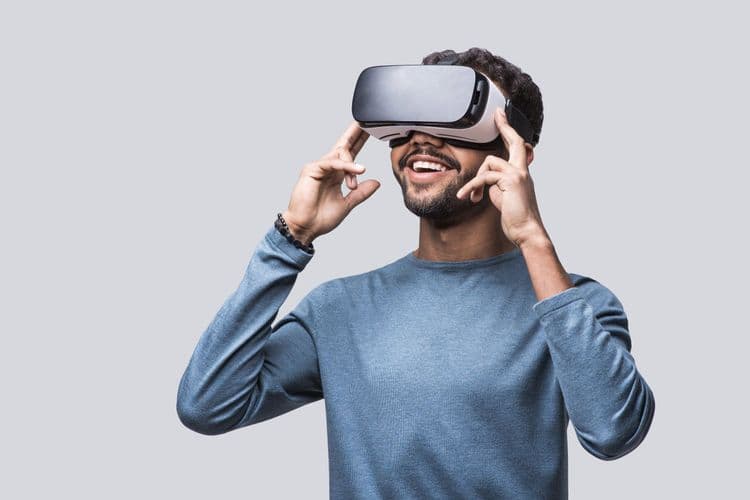
The concept of virtual reality (VR) began taking shape in the 1960s with the creation of the "Sensorama, " a groundbreaking invention by filmmaker Morton Heilig. Developed in 1962, the Sensorama was a machine designed to immerse users in short films by combining visuals, stereo sound, vibrations, and even scents. While it wasn’t computer-based, the Sensorama provided one of the earliest VR-like experiences, giving viewers the sensation of being "inside" the scene. This multisensory invention laid the foundation for immersive technology, sparking interest in creating simulated environments.

Following the Sensorama, the first true VR headset emerged in 1968 when computer scientist Ivan Sutherland developed the "Sword of Damocles. " Unlike the Sensorama, this device was a head-mounted display, albeit a bulky and rudimentary one by today’s standards. Suspended from the ceiling due to its weight, the Sword of Damocles offered users a basic computer-generated view, introducing the idea of “virtual space” through stereoscopic visuals. Although limited, Sutherland’s invention was a major milestone, showing how technology could create immersive visual experiences that went beyond passive viewing.

Throughout the 1970s and 1980s, VR technology continued to evolve, primarily within research labs, where scientists experimented with improving visual fidelity, interactivity, and tracking. Early VR systems were used in specialized fields like flight simulation and military training, as they allowed users to practice in a controlled, virtual environment. These advances paved the way for VR to be explored as a practical tool for education, design, and more, although the technology remained largely inaccessible to the public due to high costs and technical limitations.

The 1990s saw a surge of public interest in VR as companies began developing consumer-facing devices for gaming and entertainment. However, these early systems struggled with low-resolution displays, limited processing power, and latency issues that caused motion sickness, preventing VR from becoming mainstream at the time. Despite these setbacks, VR continued to be refined behind the scenes, and researchers and developers persisted in improving the technology’s performance and user comfort.

Today, VR has transformed into a highly sophisticated, accessible technology, with sleek headsets and interactive controls that make it part of everyday applications. From gaming and virtual tourism to medical training and architectural design, VR has found its place across a wide range of fields. The technology has enabled people to experience worlds that were once unimaginable, offering new ways to learn, play, and interact in a simulated environment.

The journey of virtual reality, from the Sensorama to modern VR headsets, highlights the relentless pursuit of immersive experiences. What started as a visionary experiment with multisensory films has evolved into a powerful tool, reshaping how we engage with digital content and expanding the boundaries of human experience in the virtual world.
Related Content

History Facts

Fun Facts

10 November 2026

Post

Viagra Facts: A Heart Drug, Blue Vision and Hamsters

Why Viagra began as a heart drug, how it can tint your vision blue and why the FAA cares, and the hamster jet lag study that won an Ig Nobel Prize....

History Facts

Fun Facts

09 November 2026

Post

Cannibalism: 3 True Stories You Won't Believe

Which state bans cannibalism, why the CDC warned about placenta pills, and how a tribe's funeral ritual may have left a gene that fights brain disease....

History Facts

Fun Facts

09 November 2026

Post

The Laughing Sickness That Shut Down Schools

In 1962, three schoolgirls started laughing and a whole region couldn't stop. Nobody was joking....

History Facts

Fun Facts

09 November 2026

Post

The Surprising Origin of the Movie Trailer

One of these claims about the first movie trailer is true, and one is completely made up. Can you guess which one really happened?...

Language Facts

Fun Facts

08 November 2026

Post

Your Latte Art Is Named After a Monk's Hood

A Sunday coffee order shares its name with a monk's wardrobe and a monkey. Here's the link....

Tech Facts

Fun Facts

08 November 2026

Post

How NASA Sends Tools to Astronauts in Orbit

One of these claims about NASA and tools for astronauts is true, and one is completely made up. Can you guess which one really happened?...

History Facts

Fun Facts

08 November 2026

Post

Tattoos: The Iceman, Ink in Your Nodes (+1 More)

Ötzi's 5,300-year-old tattoos, where your tattoo ink really travels in your body, and the company that frames a dead loved one's actual tattooed skin....

History Facts

Fun Facts

07 November 2026

Post

The Taboo Word That Broke Through Ad Breaks

One of these claims about a taboo word in a 1980s TV commercial is true, and one is completely made up. Can you guess which one really happened?...

Sports Facts

Fun Facts

07 November 2026

Post

Why a Marathon Is Exactly 26.2 Miles Long

The odd number behind every marathon traces back to one summer day in London. Here's how it happened....

History Facts

Fun Facts

07 November 2026

Post

Starbucks Secrets: Pequod, the CIA and Fecal Ice

The Moby-Dick name Starbucks almost used, the secret store inside CIA headquarters and the 2017 UK investigation that found fecal bacteria in coffee shop ice....

History Facts

Fun Facts

06 November 2026

Post

Lobotomies: 3 True Stories That Sound Made Up

How lobotomies won a Nobel Prize, why a 12-year-old was operated on for being a kid, and the secret Kennedy family surgery that was hidden for decades....

Food

Fun Facts

06 November 2026

Post

The Curious Case of How Spam Got Its Name

One of these claims about how Spam got its name is true, and one is completely made up. Can you guess which one really happened?...

Language Facts

Fun Facts

06 November 2026

Post

A Frustrated Author, a Word List, and a Hat

A famous children's book began as a publisher's headache. The author hated the assignment....

Food

Fun Facts

05 November 2026

Post

The Sweet Secret Behind a Sitcom Kitchen Table

One of these claims about a famous sitcom's kitchen-table dessert is true, and one isn't. Can you guess which behind-the-scenes story really happened?...

History Facts

Fun Facts

05 November 2026

Post

The Lottery Was Rigged: 3 Wild True Stories

A fortune cookie that picked 110 winners, a live TV drawing rigged to hit 666 and the security director who rigged jackpots: three true lottery scandals....
Terms and ConditionsDo Not Sell or Share My Personal InformationPrivacy PolicyPrivacy NoticeAccessibility NoticeUnsubscribe
Copyright © 2026 Fun Fact Feed