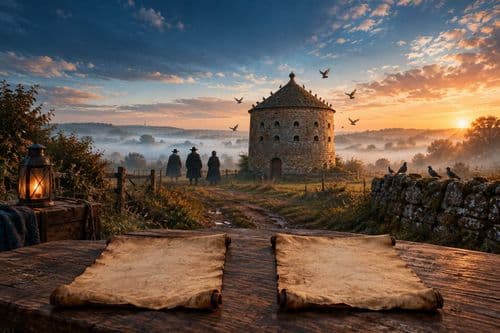
In April 1815, Mount Tambora in Indonesia exploded in the most powerful volcanic eruption in recorded history. The explosion was heard 1,200 miles away. An estimated 71,000 people died immediately from the blast and resulting tsunamis. But the true devastation was just beginning—and it would circle the entire globe.
Tambora ejected an estimated 24 cubic miles of rock, ash, and pumice into the atmosphere. The eruption column reached 28 miles high, punching through the stratosphere. But it was the invisible killer that caused the real catastrophe: sulfur dioxide gas that created a veil of sulfuric acid droplets in the upper atmosphere, blocking sunlight worldwide.
The year 1816 became known as "The Year Without a Summer." Global temperatures dropped by 0.4–0.7°C, which sounds minor but was catastrophic for agriculture. In June 1816, snow fell in New York and Massachusetts. Frost killed crops in July. August brought killing freezes across the northern United States and Canada.
Europe fared even worse. Continuous rain throughout the summer destroyed harvests across the continent. Food prices skyrocketed. Riots broke out in France, Germany, and Switzerland as people starved. Tens of thousands died from famine and disease. Historians estimate the eruption killed an additional 100,000 people worldwide through starvation and typhus outbreaks.
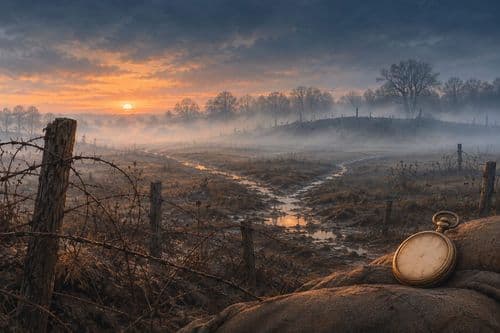
The bizarre weather created strange atmospheric phenomena. Sunsets glowed vivid red and orange for years after the eruption. The ash particles in the upper atmosphere scattered light in ways that created some of the most spectacular—and eerie—sunsets ever recorded. British artist J.M.W. Turner painted these apocalyptic skies, and his work from this period shows the haunting beauty of a world shrouded in volcanic haze.
But one of history's most famous novels was born from this disaster. In June 1816, Mary Shelley was vacationing with friends at Lake Geneva in Switzerland. The weather was so miserably cold and rainy that they couldn't go outside. To pass the time, Lord Byron suggested they each write a ghost story.
Trapped indoors by the volcanic winter, 18-year-old Mary Shelley conceived "Frankenstein." The novel's themes of scientific hubris, unnatural creation, and nature's revenge against humanity were directly influenced by the apocalyptic atmosphere of 1816. The relentless gloom, crop failures, and sense that nature itself had turned hostile seeped into her writing.
The eruption changed global weather patterns for three years. Monsoons in Asia shifted, causing catastrophic flooding in China and India. The disruption of normal seasonal patterns led to cholera outbreaks that spread from India to Moscow, killing hundreds of thousands.
The agricultural disaster had unexpected consequences. In New England, crop failures drove mass migration westward. Tens of thousands of farmers abandoned their land and headed to the Midwest, accelerating American expansion. The famine also spurred agricultural innovation—farmers began experimenting with cold-resistant crops and new preservation methods.
In Switzerland, the food crisis became so severe that the government declared a national emergency. Starving people resorted to eating moss, cats, and anything remotely edible. Public soup kitchens were established, but many still died of malnutrition.
Scientists didn't understand the connection between the eruption and the climate disaster until decades later. People in Europe and America had no idea that a volcano on the other side of the world had caused their suffering. Many believed it was divine punishment or simply freak weather. The concept of global climate systems was still unknown.
The sulfur dioxide remained in the stratosphere for years, creating a planetary cooling effect. Ice core samples from Greenland and Antarctica still show the distinct chemical signature of Tambora's eruption. Scientists use these layers to date and study the impact of major volcanic events.
The eruption was rated a 7 on the Volcanic Explosivity Index (VEI)—the second-highest rating possible. Only a handful of eruptions in human history have reached this level. The sound of the explosion created pressure waves that circled the Earth multiple times.
Interestingly, the crisis led to the invention of the bicycle. **With horses dying from lack of feed due to crop failures, German inventor Karl Drais created the "running machine" in 1817—**a two-wheeled contraption that became the precursor to the modern bicycle. Volcanic disaster literally pushed humanity toward new transportation technology.
Today, volcanologists monitor Tambora and other supervolcanoes carefully. A similar eruption now would be catastrophic—not just for local populations, but for global food supplies, air travel, and climate. With modern agriculture dependent on predictable growing seasons, another "year without summer" could trigger worldwide famine affecting billions.
The 1815 eruption of Mount Tambora was a reminder of how interconnected our world is—and how a single geological event can reshape human history across the entire planet.