Fun Facts

Trending Now

The Colony That Outlawed Christmas

The Colony That Outlawed Christmas

One of these claims about a colonial-era Christmas crackdown is true, and one is completely made up. Can you guess which one really happened?

Read more
The Boss's Computer Built Cyber Monday

The Boss's Computer Built Cyber Monday

In 2005, a shopping holiday leaned on one workplace perk. Guess which.

Read more
The Year Thanksgiving Split the Country

The Year Thanksgiving Split the Country

One of these claims about a presidential Thanksgiving feud is true, and one isn't. Can you guess which story really happened?

Read more
The Sled Test That Gave Pessimism Its Name

The Sled Test That Gave Pessimism Its Name

A famous saying about things going wrong began in a desert lab. The story is messier than you'd guess.

Read more
The White House Thanksgiving Raccoon Story

The White House Thanksgiving Raccoon Story

One of these claims about a Thanksgiving gift to a president's family is true, and one is made up. Can you guess which one really happened?

Read more
See All Content
logo
  • Sports

  • History

  • Language

  • Food

  • Tech

  • Animals

  • Sports
  • History
  • Language
  • Food
  • Tech
  • Animals
  • ​

The "Useless" Organ That's Been Saving Your Life

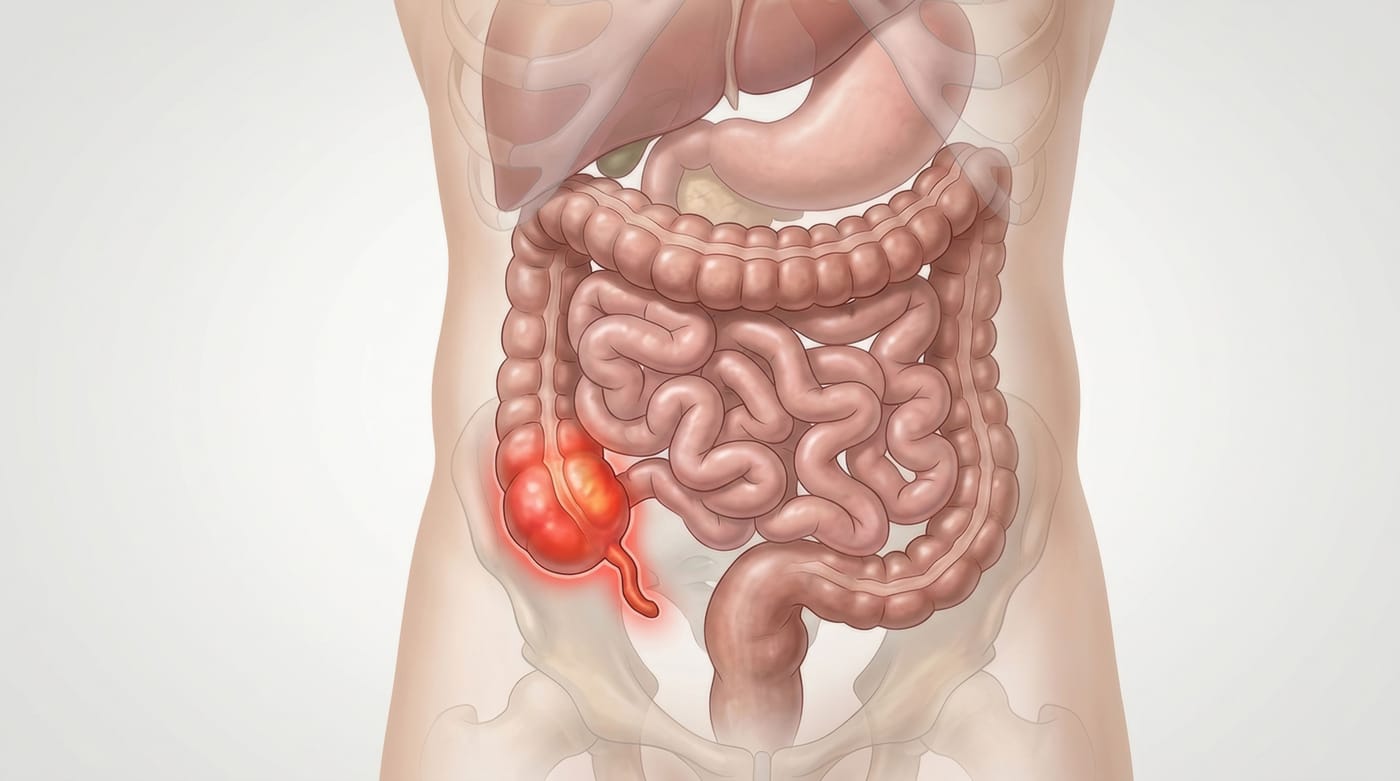
Human digestive system illustration

For most of the last century, the appendix has been treated as one of evolution's leftovers — a small, worm-shaped pouch attached to the large intestine that serves no apparent purpose and occasionally tries to kill you. Medical students were taught it was vestigial. Surgeons removed it without a second thought. The assumption was so widespread that many doctors considered appendix removal a low-risk bonus whenever they happened to be operating nearby. Then researchers actually started studying what the appendix does — and found something they hadn't expected.

The first clue came in 2007, when a team at Duke University published a paper proposing that the appendix functions as a "safe house" for beneficial gut bacteria. The idea was counterintuitive but supported by the organ's anatomy: the appendix sits in a protected position off the main digestive tract, is lined with an unusually high concentration of immune tissue, and harbors some of the densest bacterial biofilm found anywhere in the gut. Biofilms are structured colonies of microorganisms that cling to surfaces and are significantly more resistant to disruption than free-floating bacteria.

The theory goes like this: when a serious gut infection — food poisoning, cholera, severe diarrhea — sweeps through the intestines and wipes out the microbial community your body depends on, the appendix acts as a reservoir. Its sheltered position and biofilm-rich environment allow good bacteria to survive the infection that's clearing everything else out. Once the threat passes, those bacteria repopulate the gut from the appendix outward. In an era before antibiotics, probiotics, and refrigeration, this backup system would have been genuinely valuable.

The clinical evidence backing this up is specific and measurable. People without an appendix are significantly more likely to experience recurrent Clostridium difficile infections — a particularly dangerous gut infection that kills tens of thousands of people annually and is notoriously difficult to treat. A 2011 study found that patients with an appendix were 2.5 times less likely to have a recurrence of C. difficile infection compared to those who had undergone appendectomies. The appendix, apparently, is part of how the gut recovers from exactly this kind of microbial disruption.

The immune tissue angle adds another layer. The appendix contains a higher density of gut-associated lymphoid tissue than almost anywhere else in the digestive system — tissue that produces antibodies and trains immune cells to recognize threats. Researchers now believe the appendix may play a role in gut immune education, particularly early in life, helping the immune system learn to distinguish beneficial bacteria from harmful ones. This function would be most critical in infancy and childhood, which may partly explain why adults who lose their appendix seem to cope relatively well — the immune training has already happened.

The connections don't stop there. Research has linked appendectomy to a modestly increased risk of inflammatory bowel disease, heart disease, and — most surprisingly — Parkinson's disease. A large Swedish study found that people who had their appendix removed were more likely to develop Parkinson's later in life, and that the appendix in healthy people contains a protein called alpha-synuclein that accumulates in the brains of Parkinson's patients. The researchers stopped short of claiming the appendix causes or prevents Parkinson's — the relationship is complex and not fully understood — but the connection was strong enough to generate significant follow-up research.

None of this means appendectomies are wrong. An infected appendix is a genuine medical emergency, and removing it is absolutely the right call. The question the new research raises is whether routine "incidental" appendectomies — removing a healthy appendix while operating for another reason — are as consequence-free as medicine has long assumed. Some surgeons are already reconsidering the practice. The organ that spent a century being dismissed as evolutionary junk is turning out to have more going on than anyone thought.

The appendix wasn't useless. We just weren't looking carefully enough to see what it was doing.

Related Content

History Facts

Fun Facts

10 November 2026

Post

A Hostage Waits at the Palace Whenever the King Visits

Every year, a politician is held at a palace so the monarch comes home safe. Here's why....

History Facts

Fun Facts

10 November 2026

Post

The Strange Story of Gunpowder and Pigeon Droppings

One of these claims about England's old gunpowder-and-pigeon-dung business is true, and one isn't. Can you guess which one really happened?...

History Facts

Fun Facts

10 November 2026

Post

Viagra Facts: A Heart Drug, Blue Vision and Hamsters

Why Viagra began as a heart drug, how it can tint your vision blue and why the FAA cares, and the hamster jet lag study that won an Ig Nobel Prize....

History Facts

Fun Facts

09 November 2026

Post

Cannibalism: 3 True Stories You Won't Believe

Which state bans cannibalism, why the CDC warned about placenta pills, and how a tribe's funeral ritual may have left a gene that fights brain disease....

History Facts

Fun Facts

09 November 2026

Post

The Laughing Sickness That Shut Down Schools

In 1962, three schoolgirls started laughing and a whole region couldn't stop. Nobody was joking....

History Facts

Fun Facts

09 November 2026

Post

The Surprising Origin of the Movie Trailer

One of these claims about the first movie trailer is true, and one is completely made up. Can you guess which one really happened?...

Language Facts

Fun Facts

08 November 2026

Post

Your Latte Art Is Named After a Monk's Hood

A Sunday coffee order shares its name with a monk's wardrobe and a monkey. Here's the link....

Tech Facts

Fun Facts

08 November 2026

Post

How NASA Sends Tools to Astronauts in Orbit

One of these claims about NASA and tools for astronauts is true, and one is completely made up. Can you guess which one really happened?...

History Facts

Fun Facts

08 November 2026

Post

Tattoos: The Iceman, Ink in Your Nodes (+1 More)

Ötzi's 5,300-year-old tattoos, where your tattoo ink really travels in your body, and the company that frames a dead loved one's actual tattooed skin....

History Facts

Fun Facts

07 November 2026

Post

The Taboo Word That Broke Through Ad Breaks

One of these claims about a taboo word in a 1980s TV commercial is true, and one is completely made up. Can you guess which one really happened?...

Sports Facts

Fun Facts

07 November 2026

Post

Why a Marathon Is Exactly 26.2 Miles Long

The odd number behind every marathon traces back to one summer day in London. Here's how it happened....

History Facts

Fun Facts

07 November 2026

Post

Starbucks Secrets: Pequod, the CIA and Fecal Ice

The Moby-Dick name Starbucks almost used, the secret store inside CIA headquarters and the 2017 UK investigation that found fecal bacteria in coffee shop ice....

History Facts

Fun Facts

06 November 2026

Post

Lobotomies: 3 True Stories That Sound Made Up

How lobotomies won a Nobel Prize, why a 12-year-old was operated on for being a kid, and the secret Kennedy family surgery that was hidden for decades....

Food

Fun Facts

06 November 2026

Post

The Curious Case of How Spam Got Its Name

One of these claims about how Spam got its name is true, and one is completely made up. Can you guess which one really happened?...

Language Facts

Fun Facts

06 November 2026

Post

A Frustrated Author, a Word List, and a Hat

A famous children's book began as a publisher's headache. The author hated the assignment....
Terms and ConditionsDo Not Sell or Share My Personal InformationPrivacy PolicyPrivacy NoticeAccessibility NoticeUnsubscribe
Copyright © 2026 Fun Fact Feed