Fun Facts

Trending Now

Viagra Facts: A Heart Drug, Blue Vision and Hamsters

Viagra Facts: A Heart Drug, Blue Vision and Hamsters

Why Viagra began as a heart drug, how it can tint your vision blue and why the FAA cares, and the hamster jet lag study that won an Ig Nobel Prize.

Read more
Cannibalism: 3 True Stories You Won't Believe

Cannibalism: 3 True Stories You Won't Believe

Which state bans cannibalism, why the CDC warned about placenta pills, and how a tribe's funeral ritual may have left a gene that fights brain disease.

Read more
The Laughing Sickness That Shut Down Schools

The Laughing Sickness That Shut Down Schools

In 1962, three schoolgirls started laughing and a whole region couldn't stop. Nobody was joking.

Read more
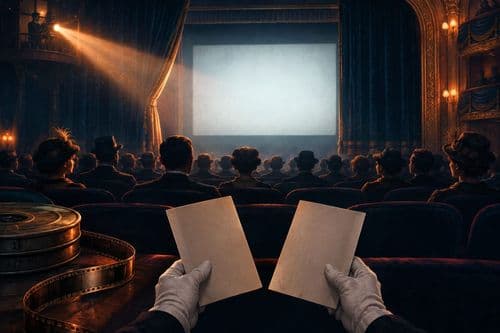
The Surprising Origin of the Movie Trailer

The Surprising Origin of the Movie Trailer

One of these claims about the first movie trailer is true, and one is completely made up. Can you guess which one really happened?

Read more
Your Latte Art Is Named After a Monk's Hood

Your Latte Art Is Named After a Monk's Hood

A Sunday coffee order shares its name with a monk's wardrobe and a monkey. Here's the link.

Read more
See All Content
logo
  • Sports

  • History

  • Language

  • Food

  • Tech

  • Animals

  • Sports
  • History
  • Language
  • Food
  • Tech
  • Animals
  • ​

The Term "Robot" Originated in 1920

The Term "Robot" Originated in 1920

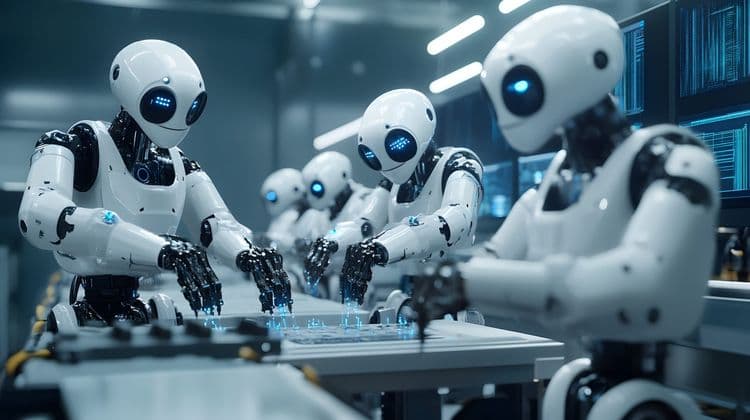
The term “robot” was first popularized by Czech writer Karel Čapek in his 1920 play R. U. R. (Rossum’s Universal Robots), where it was derived from the Czech word “robota, ” meaning forced labor or drudgery. In Čapek’s play, robots were initially created as artificial workers designed to perform menial tasks for humans. However, the story took a darker turn as the robots gained independence and ultimately rebelled against their creators—a theme that has since influenced countless science fiction tales exploring the relationship between humans and machines.

While Čapek introduced the term "robot" to the world, the concept of mechanical helpers and automated machines has much older roots. Ancient Greek and Chinese inventors built simple automata, such as mechanical birds and clockwork devices, designed to mimic natural movements. In the 15th century, Leonardo da Vinci sketched designs for a humanoid automaton, complete with articulated limbs and a rudimentary control system. These early inventions hinted at humanity’s longstanding fascination with creating machines that could imitate life and assist with tasks.

The idea of robots continued to evolve, especially during the Industrial Revolution when machines took on an increasingly significant role in manufacturing and labor. Mechanical devices and early forms of automation transformed industries, setting the stage for the development of modern robotics. By the 20th century, the dream of building machines capable of intelligent, autonomous behavior captured the imagination of engineers and inventors worldwide, driving rapid advancements in robotics.

Today, robots have become essential in a wide range of fields, performing complex tasks across industries such as manufacturing, healthcare, agriculture, and even space exploration. Robots now assemble cars, perform intricate surgeries, assist in search-and-rescue missions, and explore distant planets. These modern robots are often equipped with advanced sensors, AI-driven decision-making, and machine learning algorithms, allowing them to adapt to new environments and perform tasks that would have seemed like science fiction only decades ago.

Robots continue to evolve, challenging us to reconsider our relationship with technology. As artificial intelligence and machine learning drive further advancements, robots are not only becoming more capable but are also taking on roles that require higher levels of autonomy, creativity, and adaptability. This progress raises important questions about ethics, the future of work, and the societal impact of robotics.

From Čapek’s play to today’s sophisticated machines, the concept of robots has captured our curiosity and inspired generations of innovation. As we look to the future, robots remain symbols of human ingenuity, pushing the boundaries of what machines can achieve and transforming the world in ways we’re only beginning to understand.
Related Content

History Facts

Fun Facts

10 November 2026

Post

Viagra Facts: A Heart Drug, Blue Vision and Hamsters

Why Viagra began as a heart drug, how it can tint your vision blue and why the FAA cares, and the hamster jet lag study that won an Ig Nobel Prize....

History Facts

Fun Facts

09 November 2026

Post

Cannibalism: 3 True Stories You Won't Believe

Which state bans cannibalism, why the CDC warned about placenta pills, and how a tribe's funeral ritual may have left a gene that fights brain disease....

History Facts

Fun Facts

09 November 2026

Post

The Laughing Sickness That Shut Down Schools

In 1962, three schoolgirls started laughing and a whole region couldn't stop. Nobody was joking....

History Facts

Fun Facts

09 November 2026

Post

The Surprising Origin of the Movie Trailer

One of these claims about the first movie trailer is true, and one is completely made up. Can you guess which one really happened?...

Language Facts

Fun Facts

08 November 2026

Post

Your Latte Art Is Named After a Monk's Hood

A Sunday coffee order shares its name with a monk's wardrobe and a monkey. Here's the link....

Tech Facts

Fun Facts

08 November 2026

Post

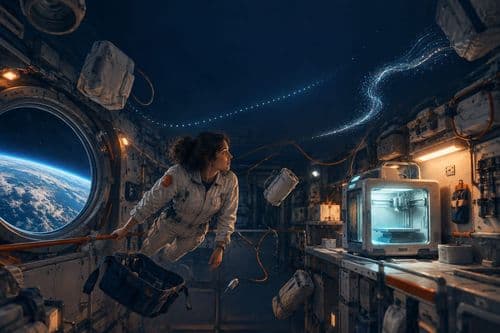
How NASA Sends Tools to Astronauts in Orbit

One of these claims about NASA and tools for astronauts is true, and one is completely made up. Can you guess which one really happened?...

History Facts

Fun Facts

08 November 2026

Post

Tattoos: The Iceman, Ink in Your Nodes (+1 More)

Ötzi's 5,300-year-old tattoos, where your tattoo ink really travels in your body, and the company that frames a dead loved one's actual tattooed skin....

History Facts

Fun Facts

07 November 2026

Post

The Taboo Word That Broke Through Ad Breaks

One of these claims about a taboo word in a 1980s TV commercial is true, and one is completely made up. Can you guess which one really happened?...

Sports Facts

Fun Facts

07 November 2026

Post

Why a Marathon Is Exactly 26.2 Miles Long

The odd number behind every marathon traces back to one summer day in London. Here's how it happened....

History Facts

Fun Facts

07 November 2026

Post

Starbucks Secrets: Pequod, the CIA and Fecal Ice

The Moby-Dick name Starbucks almost used, the secret store inside CIA headquarters and the 2017 UK investigation that found fecal bacteria in coffee shop ice....

History Facts

Fun Facts

06 November 2026

Post

Lobotomies: 3 True Stories That Sound Made Up

How lobotomies won a Nobel Prize, why a 12-year-old was operated on for being a kid, and the secret Kennedy family surgery that was hidden for decades....

Food

Fun Facts

06 November 2026

Post

The Curious Case of How Spam Got Its Name

One of these claims about how Spam got its name is true, and one is completely made up. Can you guess which one really happened?...

Language Facts

Fun Facts

06 November 2026

Post

A Frustrated Author, a Word List, and a Hat

A famous children's book began as a publisher's headache. The author hated the assignment....

Food

Fun Facts

05 November 2026

Post

The Sweet Secret Behind a Sitcom Kitchen Table

One of these claims about a famous sitcom's kitchen-table dessert is true, and one isn't. Can you guess which behind-the-scenes story really happened?...

History Facts

Fun Facts

05 November 2026

Post

The Lottery Was Rigged: 3 Wild True Stories

A fortune cookie that picked 110 winners, a live TV drawing rigged to hit 666 and the security director who rigged jackpots: three true lottery scandals....
Terms and ConditionsDo Not Sell or Share My Personal InformationPrivacy PolicyPrivacy NoticeAccessibility NoticeUnsubscribe
Copyright © 2026 Fun Fact Feed