Trending Now

Viagra Facts: A Heart Drug, Blue Vision and Hamsters

Viagra Facts: A Heart Drug, Blue Vision and Hamsters

Why Viagra began as a heart drug, how it can tint your vision blue and why the FAA cares, and the hamster jet lag study that won an Ig Nobel Prize.

Read more
Tattoos: The Iceman, Ink in Your Nodes (+1 More)

Tattoos: The Iceman, Ink in Your Nodes (+1 More)

Ötzi's 5,300-year-old tattoos, where your tattoo ink really travels in your body, and the company that frames a dead loved one's actual tattooed skin.

Read more
The Taboo Word That Broke Through Ad Breaks

The Taboo Word That Broke Through Ad Breaks

One of these claims about a taboo word in a 1980s TV commercial is true, and one is completely made up. Can you guess which one really happened?

Read more
Why a Marathon Is Exactly 26.2 Miles Long

Why a Marathon Is Exactly 26.2 Miles Long

The odd number behind every marathon traces back to one summer day in London. Here's how it happened.

Read more
Starbucks Secrets: Pequod, the CIA and Fecal Ice

Starbucks Secrets: Pequod, the CIA and Fecal Ice

The Moby-Dick name Starbucks almost used, the secret store inside CIA headquarters and the 2017 UK investigation that found fecal bacteria in coffee shop ice.

Read more
See All Content
logo
  • Sports

  • History

  • Language

  • Food

  • Tech

  • Animals

  • Sports
  • History
  • Language
  • Food
  • Tech
  • Animals
  • ​
Geography FactsFun Facts

The Island That Appeared, Disappeared, and Started a War

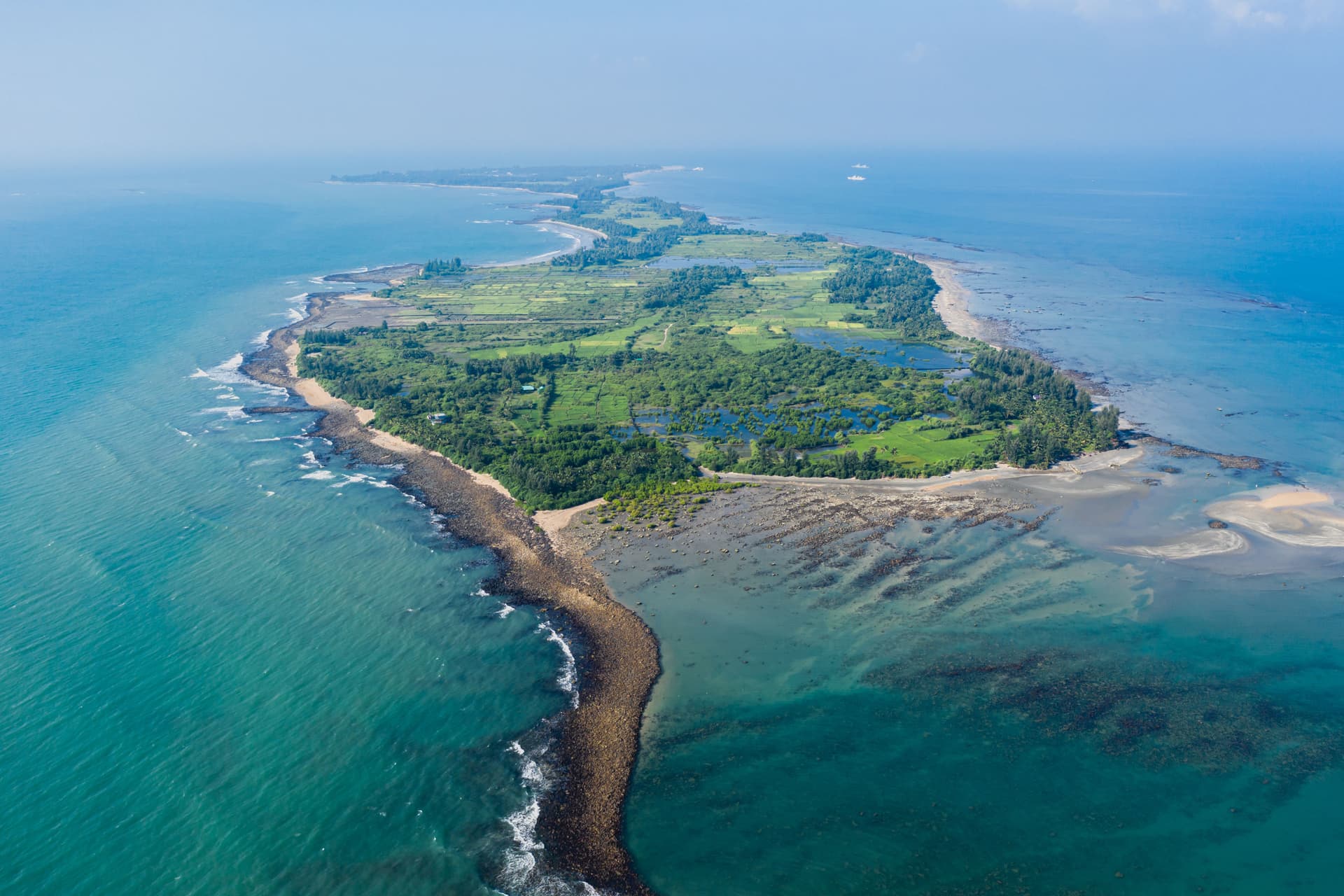
Aerial view of small island in Bay of Bengal

In November 1970, one of the deadliest cyclones in recorded history tore through the Bay of Bengal. The Bhola cyclone killed an estimated 500,000 people and reshaped the coastlines of the Ganges Delta in ways that would take years to fully understand. One of those changes was small, uninhabited, and — as it turned out — significant enough to trigger an international territorial dispute that would last 30 years.

The cyclone's storm surge deposited enough silt at the mouth of the Hariabhanga River — the border between India and what would become Bangladesh — to create a new island from scratch. India called it New Moore Island. Bangladesh called it South Talpatti. It was roughly two miles long, a mile and a half wide, and never rose more than six feet above sea level. It had no trees, no fresh water, no permanent structures of any kind. And both countries wanted it badly.

The reason wasn't the island itself — it was what lay beneath the surrounding water. The region was believed to sit above significant reserves of oil and natural gas, and under international maritime law, ownership of even a tiny island could determine which country controlled the surrounding sea floor and its resources. A worthless sandbar, in other words, was potentially worth billions.

What followed was one of the stranger diplomatic standoffs of the late 20th century. During the day, Indian coast guard vessels would sail out to the island and plant the Indian flag in its soil. At night, Bangladeshi forces would remove it. This continued for years. India eventually sent paramilitary soldiers to establish a more permanent presence in 1981, hoisting their flag and daring anyone to challenge them. Bangladesh kept challenging them anyway.

Diplomatic talks went nowhere. India rejected every Bangladeshi proposal for a joint survey of the island. Each country had its own surveys showing the main river channel ran on the side that favored their claim, and neither was willing to accept the other's data. The dispute simmered for decades, occasionally flaring into heated exchanges, never resolving.

Then, around 2010, something unexpected ended the argument permanently. Oceanographer Sugata Hazra at Jadavpur University in Calcutta confirmed what satellite imagery had been suggesting for years: New Moore Island — South Talpatti — was gone. Rising sea levels, coastal erosion, and shifting river currents had reclaimed every inch of it. The island that two nations had argued over for three decades had simply ceased to exist.

"What these two countries could not achieve from years of talking has been resolved by global warming," Hazra said at the time. He did not sound entirely pleased about it. The disappearance of the island was, scientists noted, one of the first documented cases of a territorial dispute being settled by climate change — and a preview of what may happen to dozens of other low-lying islands around the world in the coming decades.

The maritime boundary dispute between India and Bangladesh was eventually settled by international arbitration in 2014. The island itself, the thing they'd fought over, had been underwater for four years by the time the ruling came down. Two nations, three decades, and countless diplomatic hours — all over a sandbar the ocean decided it wanted back.


Related Content

History Facts

Fun Facts

10 November 2026

Post

Viagra Facts: A Heart Drug, Blue Vision and Hamsters

Why Viagra began as a heart drug, how it can tint your vision blue and why the FAA cares, and the hamster jet lag study that won an Ig Nobel Prize....

History Facts

Fun Facts

08 November 2026

Post

Tattoos: The Iceman, Ink in Your Nodes (+1 More)

Ötzi's 5,300-year-old tattoos, where your tattoo ink really travels in your body, and the company that frames a dead loved one's actual tattooed skin....

History Facts

Fun Facts

07 November 2026

Post

The Taboo Word That Broke Through Ad Breaks

One of these claims about a taboo word in a 1980s TV commercial is true, and one is completely made up. Can you guess which one really happened?...

Sports Facts

Fun Facts

07 November 2026

Post

Why a Marathon Is Exactly 26.2 Miles Long

The odd number behind every marathon traces back to one summer day in London. Here's how it happened....

History Facts

Fun Facts

07 November 2026

Post

Starbucks Secrets: Pequod, the CIA and Fecal Ice

The Moby-Dick name Starbucks almost used, the secret store inside CIA headquarters and the 2017 UK investigation that found fecal bacteria in coffee shop ice....

History Facts

Fun Facts

06 November 2026

Post

Lobotomies: 3 True Stories That Sound Made Up

How lobotomies won a Nobel Prize, why a 12-year-old was operated on for being a kid, and the secret Kennedy family surgery that was hidden for decades....

Food

Fun Facts

06 November 2026

Post

The Curious Case of How Spam Got Its Name

One of these claims about how Spam got its name is true, and one is completely made up. Can you guess which one really happened?...

Language Facts

Fun Facts

06 November 2026

Post

A Frustrated Author, a Word List, and a Hat

A famous children's book began as a publisher's headache. The author hated the assignment....

Food

Fun Facts

05 November 2026

Post

The Sweet Secret Behind a Sitcom Kitchen Table

One of these claims about a famous sitcom's kitchen-table dessert is true, and one isn't. Can you guess which behind-the-scenes story really happened?...

History Facts

Fun Facts

05 November 2026

Post

The Lottery Was Rigged: 3 Wild True Stories

A fortune cookie that picked 110 winners, a live TV drawing rigged to hit 666 and the security director who rigged jackpots: three true lottery scandals....

Sports Facts

Fun Facts

05 November 2026

Post

The Olympic Continent That Waited 130 Years

The world's biggest sporting event skipped an entire continent for over a century. Why so long?...

Humor

Fun Facts

Quotes

04 November 2026

Post

Martha Stewart's Shocking Halloween Costume Apology…

The backlash was immediate. One person on X called Stewart "tone deaf and totally out of touch"....

History Facts

Fun Facts

04 November 2026

Post

The Election Day That Was Chosen for Farmers

Why does America vote on a Tuesday in November? The answer is rooted in horses, harvests, and church....

Animal Facts

Fun Facts

04 November 2026

Post

Can Earwax Detect Cancer? (And 2 More Things in Your Ears)

Scientists are testing earwax as a way to spot cancer. Plus why cleaning your ears can make you cough and the cotton swab warning almost everyone ignores....

History

Fun Facts

Quotes

04 November 2026

Post

24-Year-Old Runner Dies After Collapsing During NYC Marathon

Rachel Apa, 24, collapsed near Mile 24 of the NYC Marathon and later died. Here's what we know about what happened and who she was....
Terms and ConditionsDo Not Sell or Share My Personal InformationPrivacy PolicyPrivacy NoticeAccessibility NoticeUnsubscribe
Copyright © 2026 Fun Fact Feed