Hatshepsut ruled ancient Egypt successfully for roughly two decades. Over the course of her reign, her official statues gradually stopped looking like a woman at all.
Her earliest depictions show her in traditional feminine dress, referred to with female titles like "Daughter of Re." As her rule progressed, artists began adding a ceremonial false beard, broader shoulders, and a bare male chest, the traditional regalia of Egyptian kingship.
This wasn't an accident or a personal preference. Ancient Egyptian tradition had no real concept of a female pharaoh, so Hatshepsut adopted the visual symbols of kingship specifically to project legitimacy to a population that had never seen a woman rule.
The transformation eventually became total. Later statues remove any trace of feminine anatomy entirely, showing her fully male in body and face, while temple inscriptions nearby still referred to her using female pronouns and titles.
After her death, someone made a deliberate effort to erase her from history. Her name and image were chiseled off temple walls and replaced with the names of other pharaohs, and several of her statues were found smashed and buried rather than simply left to decay.
The damage worked for thousands of years. Hatshepsut disappeared so thoroughly from the historical record that early Egyptologists compiling pharaoh lists didn't even include her name.
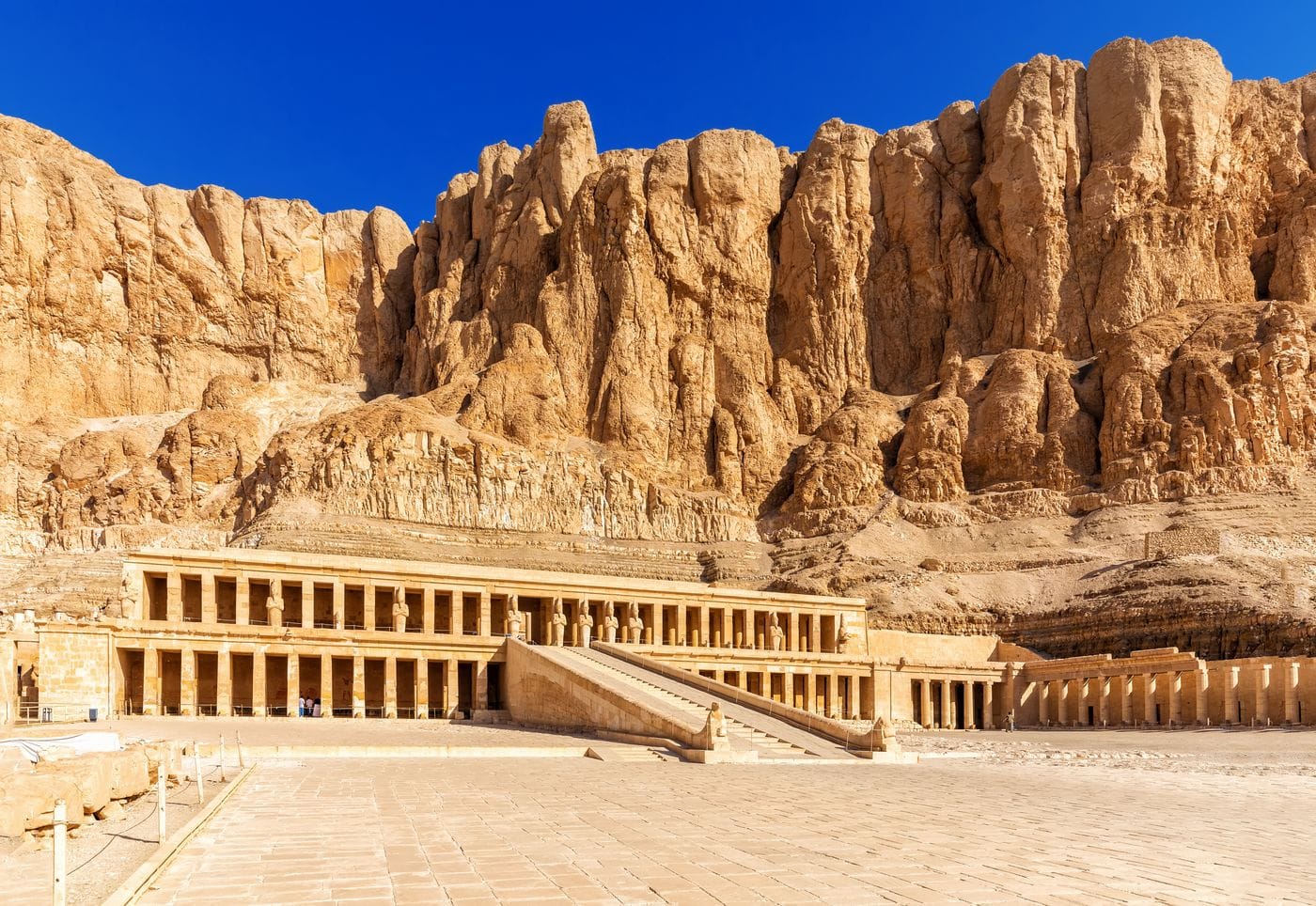
It took modern archaeology to piece her story back together. One of her statues, buried in a pit near her own temple, wasn't rediscovered until 1927, helping historians finally confirm just how successful, and how deliberately erased, her reign had actually been.