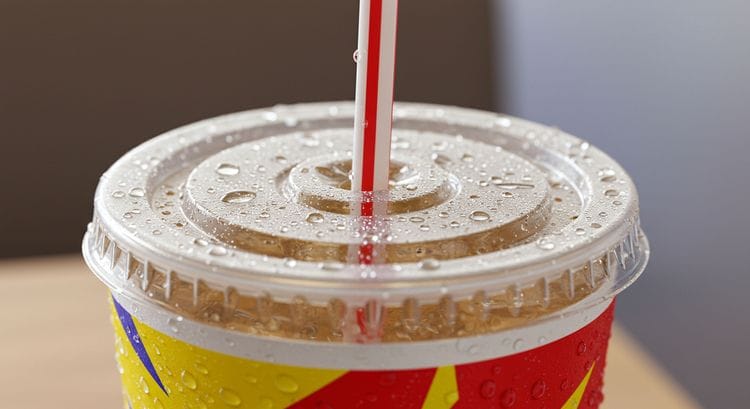
Every fast food restaurant uses virtually identical plastic lids with the same raised center dome and specific hole pattern. You probably assumed it was just standard industry design or cost-saving measures.
But those lids are precisely engineeredusingfluid dynamics researchtomanipulate how fast you drink- andthe faster you drink,the more likely you are to order refills.
The raised dome creates optimal liquid pressure thatforces liquid through the straw at a calculated rate.The hole size is calibratedtoincrease drinking speed by 23%compared to flat lids or open cups.
Fast food companies spent millions on researchto findthe exact dome height and hole diameter that maximizes consumption without causing spills.Too small and people drink slowly, too large and drinks spill everywhere.
The hole placement isn't random either.It's positionedtocreate slight vacuum pressurethatmakes liquid flow easierwhen you're not actively sucking.This unconsciously encourages frequent sippingeven when you're not particularly thirsty.
Different lid colors serve psychological purposes.Clear lids make drinks look more appealing, while white lids make beverages appear larger. The transparency also lets you see when you're running low, creating visual urgency to finish quickly.
The snap-on design creates a satisfying "pop" soundthatpsychologically reinforcesthe idea thatyour drink is fresh and sealed.This audio cue increases perceived value and makes customers feel they're getting premium service.
Alternative lid designs exist thatencourage slower, more comfortable drinking, butfast food chains deliberately avoid thembecauseslower consumption means fewer refill sales and longer table occupancy.
That simple plastic lidisn't just packaging -it's a precisely engineered tooldesigned tomanipulate your drinking behaviorandmaximize beverage profits.