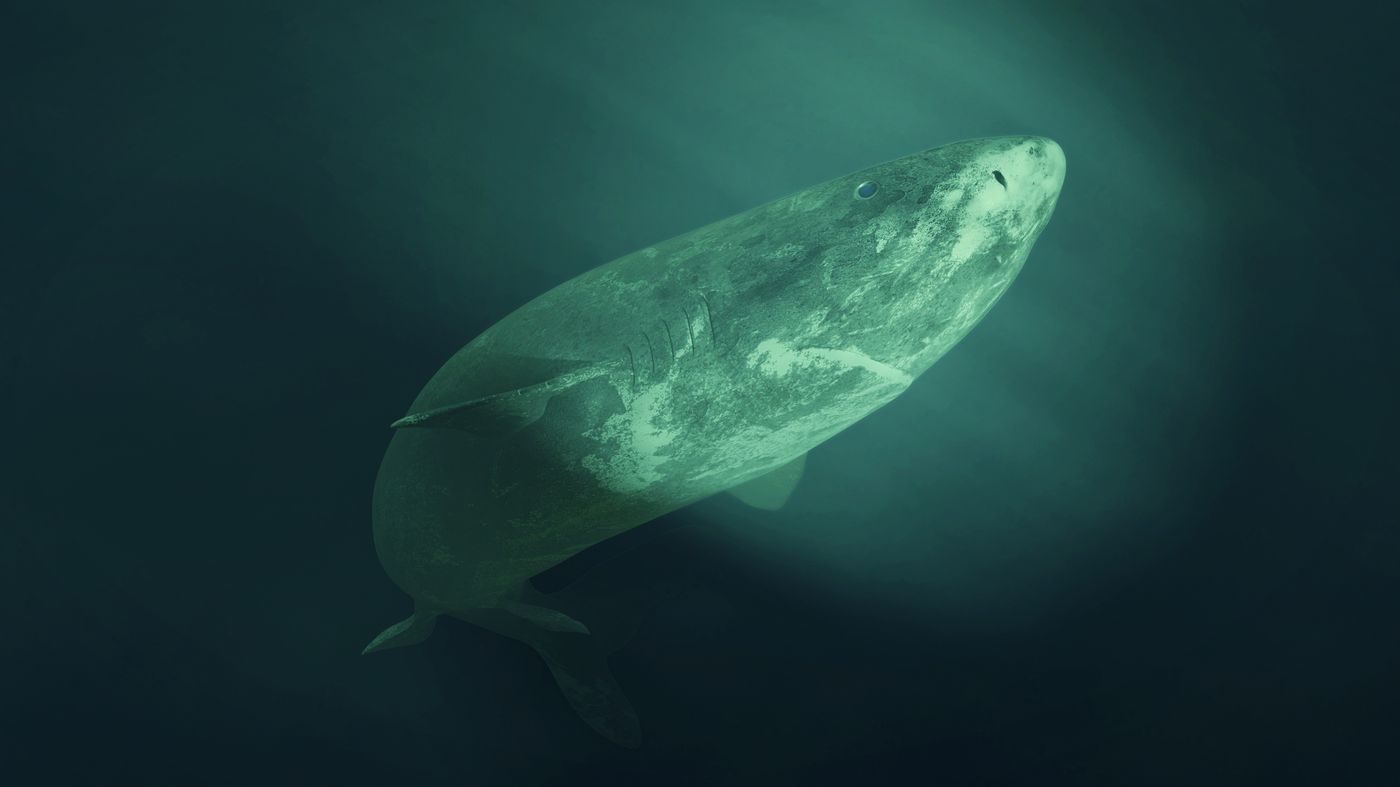
Somewhere in the Arctic Ocean right now, a shark is swimming that may have been alive before the United States was founded. Scientists have confirmed the Greenland shark lives longer than any other vertebrate on Earth, likely close to 400 years.
Figuring this out wasn't simple. Greenland sharks don't have the calcified body parts scientists normally use to count growth rings and estimate age, so researchers had to find an entirely different method.
The answer turned out to be in the shark's eyes. Scientists used radiocarbon dating on proteins inside the shark's eye lens, which form before birth and never change afterward, essentially freezing a chemical timestamp from the year the shark was born.
In a 2016 study published in the journal Science, researchers tested 28 female Greenland sharks. The oldest was estimated to be around 392 years old, with a margin of error placing its true age anywhere between 272 and 512 years.
Even more surprising is how long it takes these sharks to grow up. Greenland sharks don't reach sexual maturity until they're roughly 150 years old, meaning some sharks alive today are still technically not adults.
Their slow pace explains the longevity. These sharks grow less than half an inch per year and live in freezing, low-oxygen Arctic waters, both of which appear to dramatically slow their metabolism and aging process.
This extreme lifespan comes with a real cost. Because Greenland sharks reproduce so late and so rarely, scientists warn the species is especially vulnerable to overfishing, since it could take centuries for populations to recover from any serious decline.