Claim A says The 1904 Olympic marathon winner was given rat poison. Claim B says Fred Lorz won 1904 Olympic gold and kept the medal. Claim A is true, and Claim B is completely made up.
The race was run on August 30, 1904, in St. Louis, with 32 runners from 7 nations. The real winner, Thomas Hicks, was in rough shape long before the finish.
About seven miles from the end, race officials gave him strychnine, a poison used in rat killers. In the early 1900s it was believed to be a stimulant and performance booster. Later he got another dose, along with egg and a swig of brandy.
By the end, Hicks was hallucinating and had to be carried across the finish line. He lost about 8 pounds during the race, and his winning time was 3:28:53.
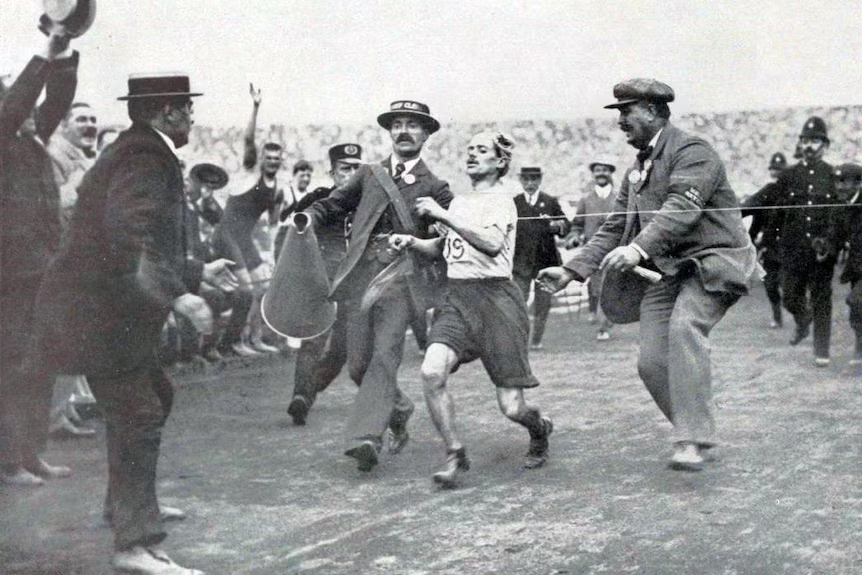
Meanwhile, Fred Lorz, a bricklayer who trained at night, had quit from exhaustion around mile nine. He hitched a ride in his manager's car for roughly 11 miles, then jumped back out and jogged in to the stadium, where he was cheered as the champion.
Claim B is wrong because Lorz never kept a gold medal. He was exposed before the medal was handed over, and Hicks was the official winner.
Think you'd have guessed it? Send this to a friend who swears marathons are boring.