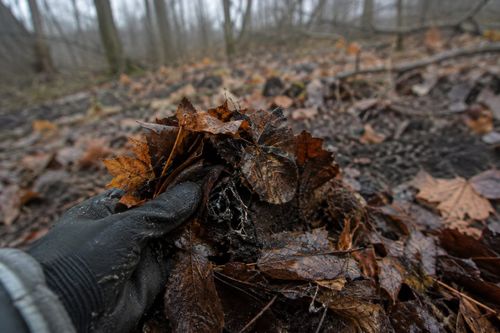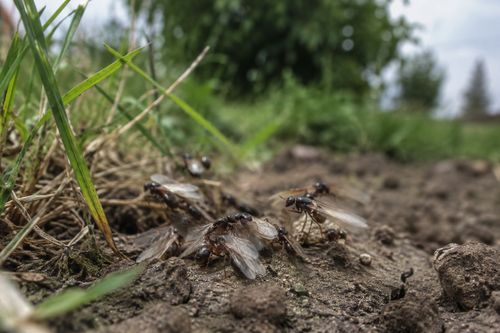
Every fall, as temperatures drop across North America, the wood frog does something no other vertebrate on earth does quite the same way. It finds a shallow spot under some leaves, lies down, and lets itself freeze completely solid. Heart stopped. Brain dark. Body stiff enough that if you dropped it, it would go "clink" like a piece of ice.
Then spring arrives. The frog thaws. And it hops away.
The problem with freezing — for any living thing — is ice crystals. When water inside a cell freezes, the crystals puncture and rupture the cell walls, killing them. That's why frostbite destroys tissue, and why freezing kills most animals that experience it. The wood frog solved this problem with a mechanism that scientists are still trying to fully understand.
The moment temperatures start to drop, the frog's liver kicks into overdrive. It floods the frog's bloodstream with massive amounts of glucose — essentially a sugar syrup — which gets pushed into every cell in the body. At the same time, special proteins trigger the water inside the cells to move outward, away from the vulnerable cell interiors.
What happens next is almost counterintuitive. The water outside the cells does freeze — forming a solid shell of ice around and between them. But the cells themselves, packed with glucose and drained of water, stay intact. The frog is technically frozen, but its cells are chemically protected from the damage that would kill any other creature.
Up to 65 to 70 percent of the frog's total body water can be frozen at once. Its heart stops. Its lungs stop. Its brain goes completely silent. By every conventional measure, it's dead. And it can stay that way for up to eight months, cycling through multiple freeze-thaw events over the course of a single winter with no lasting damage.
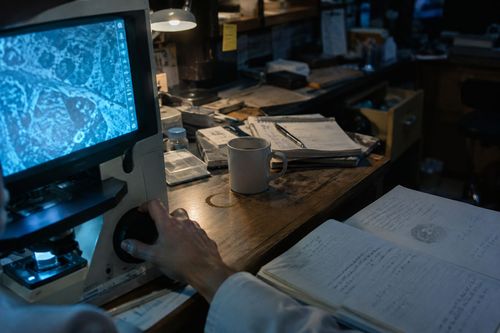
Researchers have been studying this mechanism for decades, and the implications go far beyond biology trivia. The biggest bottleneck in organ transplantation isn't supply — it's preservation time. A donated heart lasts only four to six hours outside the body. A kidney, around 24 to 36. If scientists could replicate what the wood frog does to its own cells, organs could potentially be frozen and stored for days, weeks, or longer.
Scientists at the University of Warwick have already developed a synthetic compound that mimics the frog's antifreeze proteins well enough to preserve human red blood cells through freezing. It's not a solved problem yet, but the wood frog gave researchers a proof of concept that nature had already worked out the hardest part.
The frog itself has no idea any of this is happening. It freezes, it waits, it thaws. It's been doing it for millions of years. Somewhere in those leaf piles every winter, thousands of them are lying completely still, technically dead, waiting for a season that always comes back. And every spring, without fail, so do they.