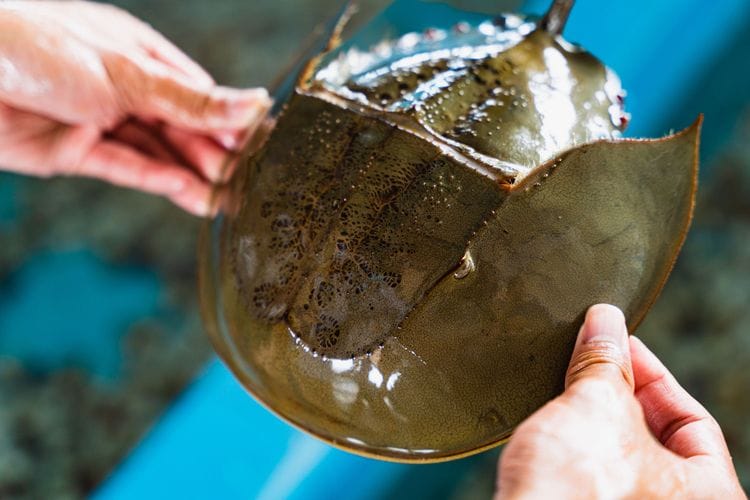
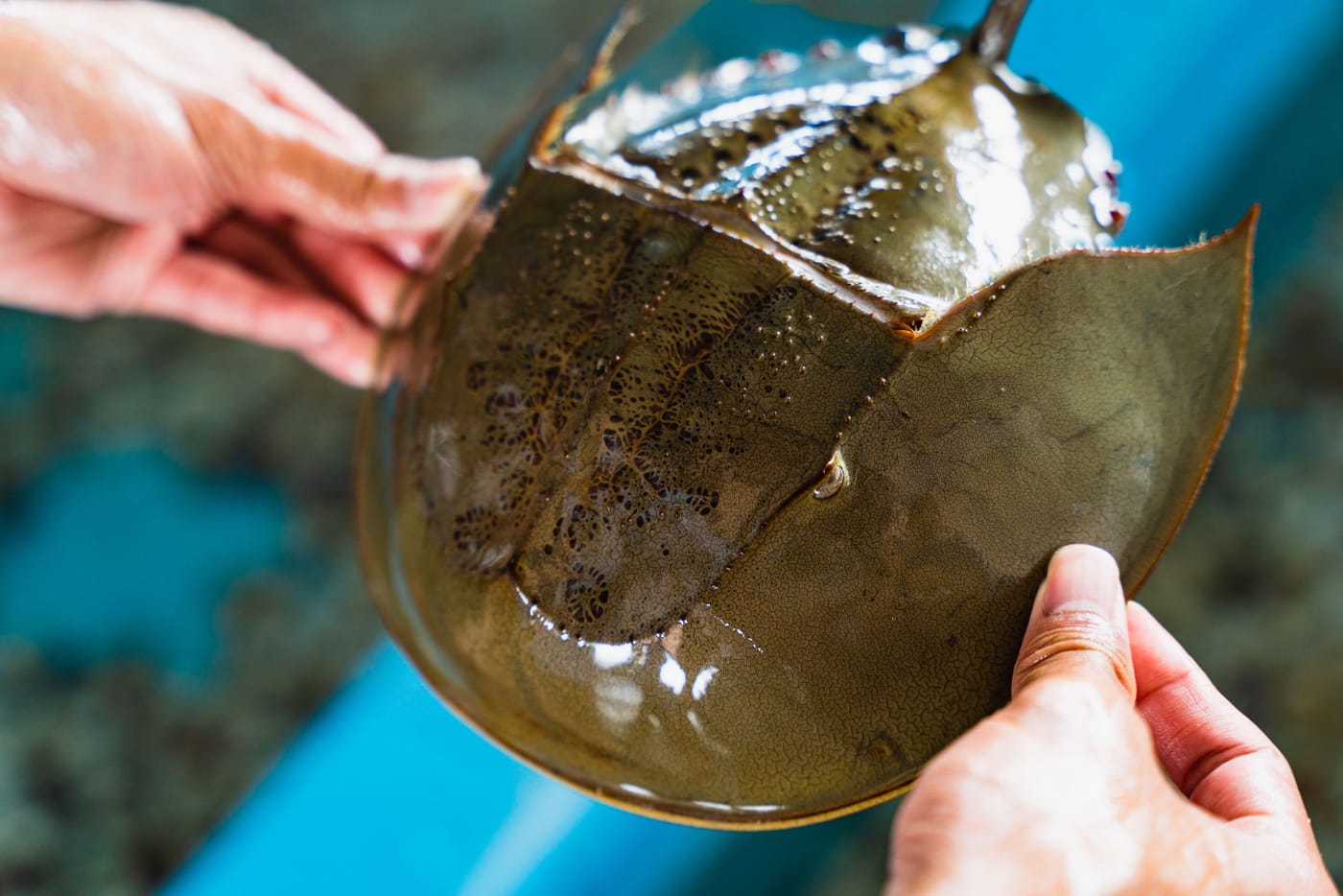
Horseshoe crabs have been crawling across the ocean floor for roughly 450 million years — longer than trees have existed. They survived the asteroid that killed the dinosaurs. They've barely changed since the Paleozoic Era. And somewhere along the way, they accidentally became one of the most valuable animals in modern medicine.
Their blood is blue. Not metaphorically — bright, vivid blue, the color of a clear sky. Where human blood gets its red from iron-based hemoglobin, horseshoe crab blood uses copper-based hemocyanin instead. But the color isn't the remarkable part.
The remarkable part is what happens when horseshoe crab blood encounters bacteria. It clots. Almost immediately, with extraordinary sensitivity — capable of detecting contamination at concentrations as low as one part per trillion. No synthetic test has ever matched it. No lab process has replicated it. For decades, it has been the only reliable method the medical industry has for detecting dangerous bacterial contamination in drugs and devices before they enter the human body.
Every vaccine, every injectable drug, every surgical implant, every IV fluid — all of it is tested with horseshoe crab blood before it reaches a patient. The COVID-19 vaccines were tested with it. So was every flu shot, every dose of insulin, every pacemaker. If the blood clots on contact with a product, that product doesn't ship.
The demand for this has created one of the stranger industries on the planet. Around 400,000 horseshoe crabs are harvested annually along the U.S. Atlantic coast, transported to pharmaceutical facilities, and bled — up to 30% of their blood volume extracted — before being returned to the ocean. The blood is processed into a compound called Limulus Amebocyte Lysate, or LAL. A single gallon is worth approximately $60,000.
The industry maintains that most crabs survive the process. Independent researchers aren't so sure. Studies have estimated mortality rates significantly higher than official figures — particularly among females, who travel farther to reach bleeding facilities and are returned to different locations than where they were caught. The full impact on horseshoe crab populations remains genuinely contested.
A synthetic alternative called rFC has been developed and is used in some countries, but the FDA has been slow to approve it as a full replacement — meaning the medical industry's dependence on a 450-million-year-old animal shows no immediate signs of ending.
The horseshoe crab didn't evolve to protect the human drug supply. It evolved a clotting response to protect itself from the bacteria in shallow ocean sediment. The fact that this ancient defense mechanism became the backbone of modern pharmaceutical safety testing is either a remarkable coincidence or proof that evolution is stranger and more useful than anyone planned.