Fun Facts

Recent Content

The Secret Formula That Controls Your Financial Life

The Secret Formula That Controls Your Financial Life

A private company's secret algorithm decides if you get a house, a car, or a loan — and almost nobody knows exactly how it works.

Read more
This Country Had No Government for 589 Days — and Nobody Cared

This Country Had No Government for 589 Days — and Nobody Cared

Belgium went 589 days without an elected government — and life barely changed. No chaos, no collapse. Just street parties and free beer.

Read more
How Big Water Made Tap Water the Enemy

How Big Water Made Tap Water the Enemy

The bottled water industry spent billions convincing you tap water is dangerous. The truth about what's actually in that bottle will shock you.

Read more
The Dark and Bloody Origin of the Teddy Bear

The Dark and Bloody Origin of the Teddy Bear

The world's most beloved children's toy was born from a brutal hunting trip, a political cartoon, and a bear that was clubbed unconscious and tied to a tree.

Read more
The Disturbing Truth About How Memory Actually Works

The Disturbing Truth About How Memory Actually Works

Researchers have successfully implanted entirely false memories into real people's minds. The scary part? The subjects were completely convinced they were real.

Read more
See All Content

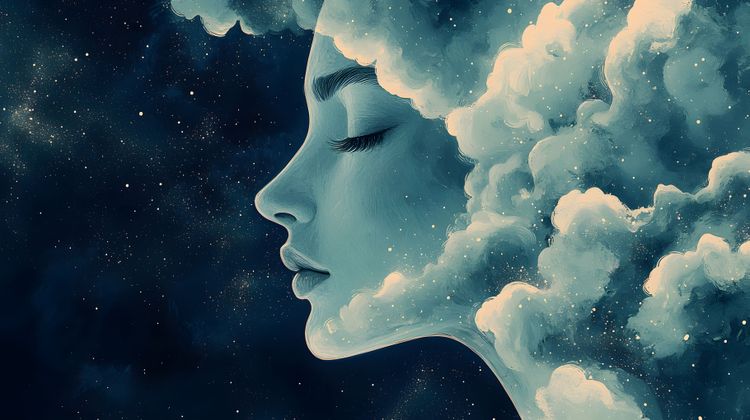
Why Some People Have No Mind's Eye

Why Some People Have No Mind's Eye

When you close your eyes and try to picture a red apple, what do you see? For most people, a vivid image appears in their mind complete with color, shape, and texture.

But for 2-5% of the population, there's absolutely nothing—just complete darkness where mental images should be. This condition is called aphantasia, and people who have it literally cannot form visual pictures in their mind's eye.

Many people with aphantasia don't discover their condition until adulthood because they assume everyone else experiences "visualizing" the same way they do. They think phrases like "picture this" or "see it in your mind" are just metaphors.

The discovery often happens by accident during casual conversations. Someone might mention "counting sheep" to fall asleep, and a person with aphantasia realizes they've never actually seen sheep in their mind—they just think about the concept of sheep without any visual component.

When asked to remember what their mother looks like, people with aphantasia know factual details—brown hair, green eyes, tall—but see no actual visual image. They navigate the world through spatial relationships, verbal descriptions, and conceptual understanding rather than mental pictures.

This affects everything from how they dream to how they remember faces. People with aphantasia often have dreams without visual content, rely heavily on written directions rather than mental maps, and may struggle to recognize people they haven't seen recently.

The condition creates unique challenges in daily life. They can't visualize outfits before getting dressed, can't picture furniture arrangements before moving, and often struggle with books that rely heavily on visual descriptions. However, they tend to be excellent at remembering facts, names, and abstract concepts because their brains allocate more resources to non-visual processing.

Surprisingly, many people with aphantasia excel in abstract fields like mathematics, programming, and philosophy. Their brains seem to process information more efficiently through non-visual pathways, leading some researchers to believe aphantasia might actually be an advantage for certain types of thinking.

The condition exists on a spectrum—some people see incredibly vivid mental images, others see vague outlines, and those with aphantasia see nothing at all. Scientists are still discovering how this fundamental difference in mental processing affects learning, creativity, and memory formation.

Recent studies suggest that people with aphantasia may have different brain structures in areas responsible for visual imagery, but they often develop enhanced abilities in other cognitive areas. Some researchers believe aphantasia might explain why certain people are naturally drawn to careers requiring abstract thinking rather than visual creativity.


Related Content

Fun Facts

05 March 2026

Post

This Country Had No Government for 589 Days — and Nobody Cared

Belgium went 589 days without an elected government — and life barely changed. No chaos, no collapse. Just street parties and free beer....

Fun Facts

06 March 2026

Post

How Big Water Made Tap Water the Enemy

The bottled water industry spent billions convincing you tap water is dangerous. The truth about what's actually in that bottle will shock you....

Fun Facts

08 March 2026

Post

The Disturbing Truth About How Memory Actually Works

Researchers have successfully implanted entirely false memories into real people's minds. The scary part? The subjects were completely convinced they were real....

Fun Facts

09 March 2026

Post

Why You Always Wake Up Before You Hit the Ground

That falling dream that jolts you awake every time? Your brain is doing something fascinating — and scientists have finally figured out why....

Fun Facts

10 March 2026

Post

Humans Are the Only Animals That Blush — and Nobody Knows Why

Darwin spent his entire career trying to explain why humans blush. He failed. Scientists today still can't fully explain it — and that mystery goes deep....

Fun Facts

11 March 2026

Post

Why You're Probably Terrible at Spotting Lies

The "tells" you rely on to catch liars? Science says they're mostly myths — and your lie-detection ability is barely better than a coin flip....

Fun Facts

13 March 2026

Post

The Island Where Visitors Are Legally Allowed to Be Killed

North Sentinel Island's inhabitants have rejected outside contact for 60,000 years — and the government made it legal for them to kill anyone who tries....

Fun Facts

14 March 2026

Post

Why Your Nose Runs When You Cry (Your Face Is Weirder Than You Think)

When you cry, your nose runs — but it's not what you think. Your eyes and nose share a drainage system, and the explanation is genuinely bizarre....

Fun Facts

15 March 2026

Post

How Napster Broke the Music Industry — Then Accidentally Saved It

Napster nearly destroyed the music industry. But the chaos it caused forced a digital transformation that made the industry more money than it ever made before....

Fun Facts

16 March 2026

Post

Why You Can't Remember Being a Baby (And Why the Answer Is Stranger Than You Think)

You were learning constantly as a baby — so why can't you remember any of it? The neuroscience behind childhood amnesia is far stranger than you'd expect....

Fun Facts

25 March 2026

Post

Why Eyewitness Testimony Is Basically Junk Science

Eyewitness testimony is the most persuasive evidence in court — and one of the least reliable. Science has known this for decades....

Fun Facts

26 March 2026

Post

Why Only 10% of People Are Left-Handed

Left-handers have been exactly 10% of the population for 5,000 years. The evolutionary reason why involves combat, language, and the brain....

Fun Facts

27 March 2026

Post

The Drug You've Been Taking Every Day Since Childhood

Caffeine blocks your brain's tiredness signals, causes physical dependence, and produces clinical withdrawal. Most people have taken it since childhood....

Fun Facts

28 March 2026

Post

Why Your Brain Won't Let You Forget Embarrassing Moments

Your brain archives embarrassing moments with brutal clarity — and replaying them makes them worse. The neuroscience behind it is almost comforting....

Fun Facts

29 March 2026

Post

The Real Reason You Keep Following the Wrong People

Confidence and competence are barely related — but your brain treats them as the same thing. The consequences of that reach further than most people realize....
Terms and ConditionsDo Not Sell or Share My Personal InformationPrivacy PolicyPrivacy NoticeAccessibility NoticeUnsubscribe
Copyright © 2026 Fun Fact Feed