On October 29, 1929, panic hit the New York Stock Exchange so hard that the machines meant to report it simply couldn't keep pace. Traders were screaming sell orders faster than any system had ever been asked to handle.
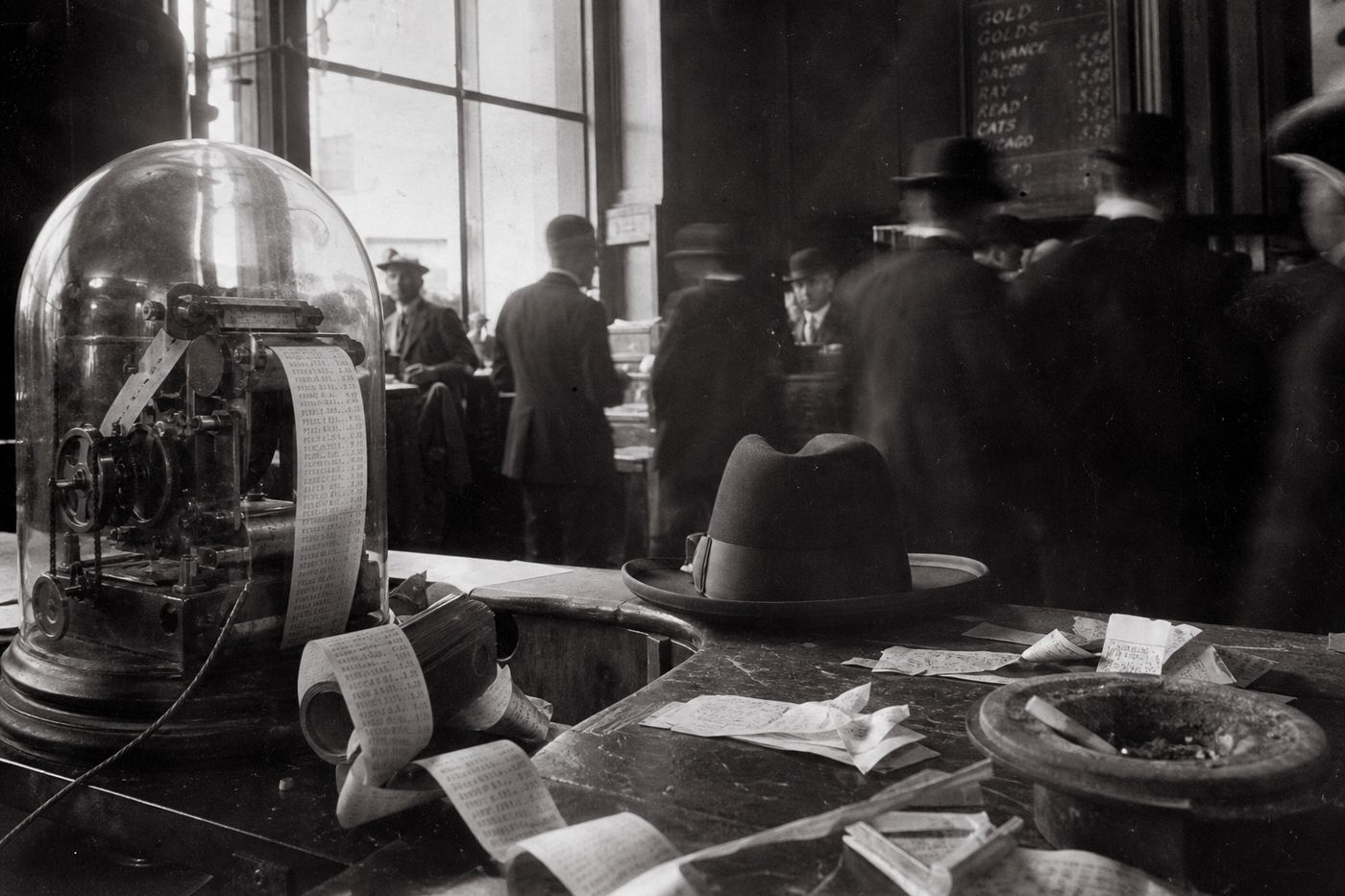
The ticker tape, that thin paper ribbon printing prices in real time, was the only way most of the country learned what was happening on the floor. It relied on a mechanical system built decades earlier, never designed for true chaos.
By early afternoon the tape had fallen so far behind that it was printing prices nearly two and a half hours old. Investors watching the tape outside the exchange had no idea what was actually happening to their money in that exact moment.
Crowds gathered around ticker machines in banks and brokerages nationwide, staring at numbers that were already ancient history by the time they appeared. Some people made decisions based on prices that no longer existed anywhere except on that strip of paper.
The delay didn't just confuse investors, it actively worsened the crash. Rumors filled the gap between real events and the delayed tape, and panic spread faster than accurate information ever could.
By the time the tape finally caught up near midnight, the damage was already done. The market had lost billions in value, and the lag itself became one of the quiet culprits historians point to when explaining how confusion metastasized into full collapse.
That single delayed ribbon of paper helped push regulators toward building the faster, more transparent reporting systems that Wall Street still depends on today. A printing machine's failure to keep up quietly reshaped how the entire financial world tracks itself.