
Fun Facts

Recent Content

The Secret Formula That Controls Your Financial Life

The Secret Formula That Controls Your Financial Life

A private company's secret algorithm decides if you get a house, a car, or a loan — and almost nobody knows exactly how it works.

Read more
This Country Had No Government for 589 Days — and Nobody Cared

This Country Had No Government for 589 Days — and Nobody Cared

Belgium went 589 days without an elected government — and life barely changed. No chaos, no collapse. Just street parties and free beer.

Read more
How Big Water Made Tap Water the Enemy

How Big Water Made Tap Water the Enemy

The bottled water industry spent billions convincing you tap water is dangerous. The truth about what's actually in that bottle will shock you.

Read more
The Dark and Bloody Origin of the Teddy Bear

The Dark and Bloody Origin of the Teddy Bear

The world's most beloved children's toy was born from a brutal hunting trip, a political cartoon, and a bear that was clubbed unconscious and tied to a tree.

Read more
The Disturbing Truth About How Memory Actually Works

The Disturbing Truth About How Memory Actually Works

Researchers have successfully implanted entirely false memories into real people's minds. The scary part? The subjects were completely convinced they were real.

Read more
See All Content

The Surgeon General Just Declared Loneliness an Epidemic

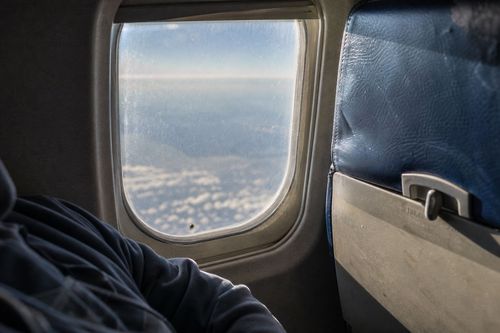
Person sitting alone looking out window

In 2023, the U.S. Surgeon General declared loneliness a public health epidemic. Not a social problem. Not a mental health concern. A physical health crisis — one that increases the risk of premature death by nearly 30%, raises the risk of stroke by 32%, and raises the risk of heart disease by 29%. The medical establishment had finally caught up to what the research had been showing for decades.

The comparison that got the most attention was the smoking equivalent. Chronic loneliness, researchers found, carries health risks broadly comparable to smoking — a finding that stopped a lot of people cold. We have entire public health campaigns, warning labels, and legal restrictions built around the dangers of cigarettes. Loneliness gets a fraction of that attention, despite affecting far more people.

What makes loneliness so physically dangerous isn't the sadness — it's what happens neurologically when the brain perceives social isolation as a threat. Loneliness triggers the same threat-detection system as physical danger. The brain, treating social disconnection as a survival emergency, activates a stress response: elevated cortisol, heightened inflammation, a shift toward self-protective behavior. In short bursts, this is functional. Chronic activation of this system quietly destroys the body.

This is by evolutionary design. Humans are among the most socially dependent species on earth — our ancestors who felt acute distress when separated from their group were more likely to reconnect, and more likely to survive. Loneliness is not a weakness or a personality flaw. It's a biological alarm system, like hunger or thirst, signaling that something essential is missing. The problem is that in the modern world, the alarm can run for years without being answered.

The scale of the problem is larger than most people realize. A 2019 Cigna survey found that 61% of American adults reported feeling lonely — and that was before the pandemic. Younger adults, counterintuitively, reported higher rates of loneliness than the elderly, despite being the most digitally connected generation in history. Social media, it turns out, is a poor substitute for the kind of connection the brain is actually looking for.

The cognitive effects are equally serious. Chronic loneliness is associated with a 50% increased risk of developing dementia, impaired sleep, and measurable declines in cognitive function. Lonely people also show heightened sensitivity to social threat — they become more likely to interpret ambiguous interactions as hostile, which makes forming new connections harder, which deepens the isolation. It's a self-reinforcing cycle with a physiological engine.

What the research consistently shows actually helps is not what most people reach for. Passive consumption — scrolling, watching, reading — does almost nothing for loneliness. What moves the needle is interaction that feels meaningful: conversations with real back-and-forth, shared physical presence, activities that create a sense of being genuinely known by another person. The brain is not looking for contact. It's looking for connection. Those are not the same thing.

The Surgeon General's report called on employers, schools, tech companies, and governments to treat loneliness with the same seriousness as other public health crises. Whether that happens or not, the individual reality remains: loneliness is not a feeling to push through or be embarrassed about. It's a biological signal your body is sending — one that, left unanswered long enough, starts doing measurable damage to nearly every system keeping you alive.

Related Content

Fun Facts

05 March 2026

Post

This Country Had No Government for 589 Days — and Nobody Cared

Belgium went 589 days without an elected government — and life barely changed. No chaos, no collapse. Just street parties and free beer....

Fun Facts

06 March 2026

Post

How Big Water Made Tap Water the Enemy

The bottled water industry spent billions convincing you tap water is dangerous. The truth about what's actually in that bottle will shock you....

Fun Facts

08 March 2026

Post

The Disturbing Truth About How Memory Actually Works

Researchers have successfully implanted entirely false memories into real people's minds. The scary part? The subjects were completely convinced they were real....

Fun Facts

09 March 2026

Post

Why You Always Wake Up Before You Hit the Ground

That falling dream that jolts you awake every time? Your brain is doing something fascinating — and scientists have finally figured out why....

Fun Facts

10 March 2026

Post

Humans Are the Only Animals That Blush — and Nobody Knows Why

Darwin spent his entire career trying to explain why humans blush. He failed. Scientists today still can't fully explain it — and that mystery goes deep....

Fun Facts

11 March 2026

Post

Why You're Probably Terrible at Spotting Lies

The "tells" you rely on to catch liars? Science says they're mostly myths — and your lie-detection ability is barely better than a coin flip....

Fun Facts

13 March 2026

Post

The Island Where Visitors Are Legally Allowed to Be Killed

North Sentinel Island's inhabitants have rejected outside contact for 60,000 years — and the government made it legal for them to kill anyone who tries....

Fun Facts

14 March 2026

Post

Why Your Nose Runs When You Cry (Your Face Is Weirder Than You Think)

When you cry, your nose runs — but it's not what you think. Your eyes and nose share a drainage system, and the explanation is genuinely bizarre....

Fun Facts

15 March 2026

Post

How Napster Broke the Music Industry — Then Accidentally Saved It

Napster nearly destroyed the music industry. But the chaos it caused forced a digital transformation that made the industry more money than it ever made before....

Fun Facts

16 March 2026

Post

Why You Can't Remember Being a Baby (And Why the Answer Is Stranger Than You Think)

You were learning constantly as a baby — so why can't you remember any of it? The neuroscience behind childhood amnesia is far stranger than you'd expect....

Fun Facts

25 March 2026

Post

Why Eyewitness Testimony Is Basically Junk Science

Eyewitness testimony is the most persuasive evidence in court — and one of the least reliable. Science has known this for decades....

Fun Facts

26 March 2026

Post

Why Only 10% of People Are Left-Handed

Left-handers have been exactly 10% of the population for 5,000 years. The evolutionary reason why involves combat, language, and the brain....

Fun Facts

27 March 2026

Post

The Drug You've Been Taking Every Day Since Childhood

Caffeine blocks your brain's tiredness signals, causes physical dependence, and produces clinical withdrawal. Most people have taken it since childhood....

Fun Facts

28 March 2026

Post

Why Your Brain Won't Let You Forget Embarrassing Moments

Your brain archives embarrassing moments with brutal clarity — and replaying them makes them worse. The neuroscience behind it is almost comforting....

Fun Facts

29 March 2026

Post

The Real Reason You Keep Following the Wrong People

Confidence and competence are barely related — but your brain treats them as the same thing. The consequences of that reach further than most people realize....
Terms and ConditionsDo Not Sell or Share My Personal InformationPrivacy PolicyPrivacy NoticeAccessibility NoticeUnsubscribe
Copyright © 2026 Fun Fact Feed