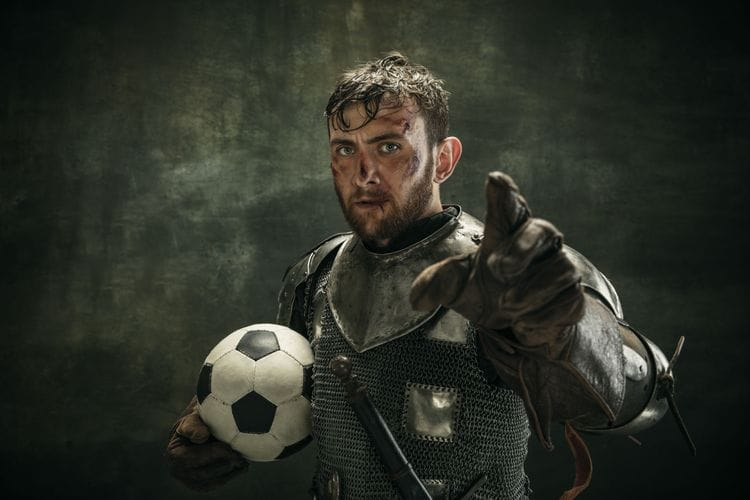
Medieval football was so violent and deadly that English kings banned it multiple times between 1314 and 1667. The game involved entire villages fighting over a ball with no rules, no boundaries, and no limits on violence. Deaths were common, and property damage was guaranteed.
Medieval football wasn't played on fields—it was played across entire towns. Games could last for days as hundreds of participants fought to move a ball from one village to another, sometimes several miles apart. Players used any means necessary: punching, kicking, biting, and using weapons were all considered fair play.
King Edward II banned football in 1314 because it was causing too many injuries and deaths. His proclamation called it "hustling over large balls" and declared it a threat to public order. Subsequent kings renewed the ban because football games regularly turned into full-scale riots that destroyed shops, homes, and churches.
The violence was so extreme that military leaders complained football was making better soldiers than actual military training. Men who survived medieval football games were considered excellent candidates for warfare because they'd already proven they could handle brutal hand-to-hand combat.
Modern soccer evolved from these deadly medieval games, but it took centuries to develop rules that prevented fatalities. The transformation from village-destroying riot to civilized sport represents one of humanity's greatest achievements in taming violence through regulation.
Every peaceful soccer match today exists because medieval football was finally made safe enough that kings stopped banning it as a threat to civilization.