Fun Facts
Animal Facts

Recent Content

Why Boxing Day Is Called Boxing Day

Why Boxing Day Is Called Boxing Day

Boxing Day started as the one day British servants got off after working Christmas. They received boxes of leftovers and tips from their employers.

Read more
Christmas Trees Started as Pagan Worship of Odin

Christmas Trees Started as Pagan Worship of Odin

Decorating evergreen trees at winter originated with Germanic tribes honoring Odin.

Read more
Santa Claus Did Not Always Wear Red

Santa Claus Did Not Always Wear Red

Before Coca-Cola's marketing campaign, Santa was depicted in blue, green, and purple across different cultures.

Read more
How November and December Are the Most Dangerous Months

How November and December Are the Most Dangerous Months

Holiday decorating sends over 15,000 people to the ER annually, and spoiled Christmas leftovers cause 400,000+ illnesses.

Read more
The Paranoid History Behind Clinking Glasses During Toasts

The Paranoid History Behind Clinking Glasses During Toasts

Clinking glasses before drinking started as a medieval poison detection method. Now it's mandatory etiquette that nobody questions.

Read more
See All Content
logo
  • Sports

  • History

  • Language

  • Food

  • Tech

  • Animals

  • Sports

  • History

  • Language

  • Food

  • Tech

  • Animals

  • ​
    ​

The Silent Octopus—The Ocean's Earless Wonder

The Silent Octopus—The Ocean's Earless Wonder

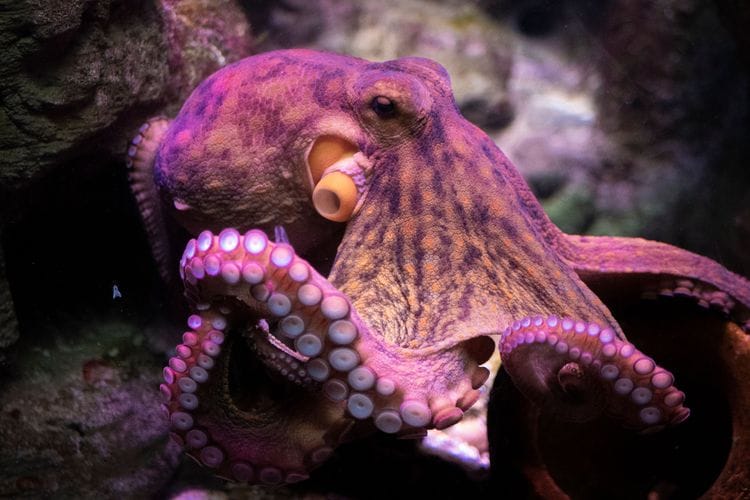
While octopuses are renowned for their problem-solving skills and color-changing abilities, there's something peculiar about their sensory system: octopuses don't have ears. Yet somehow, these intelligent cephalopods can still detect sounds in their underwater environment.

Instead of ears, octopuses "hear" through their entire body. Their skin and internal structures can sense the pressure waves that sound creates in water. This whole-body approach to sound detection allows them to respond to low-frequency sounds and vibrations that might signal danger or potential prey.

Even more remarkably, octopuses can determine the direction of sound without specialized hearing organs. Their eight arms, covered in thousands of chemoreceptors and suction cups, work as an extended nervous system, making them essentially one big sensory organ. Talk about full-body listening!

Related Content

Terms and ConditionsDo Not Sell or Share My Personal InformationPrivacy PolicyPrivacy NoticeAccessibility NoticeUnsubscribe
Copyright © 2025 Fun Fact Feed