Fun Facts

Recent Content

Why Boxing Day Is Called Boxing Day

Why Boxing Day Is Called Boxing Day

Boxing Day started as the one day British servants got off after working Christmas. They received boxes of leftovers and tips from their employers.

Read more
Christmas Trees Started as Pagan Worship of Odin

Christmas Trees Started as Pagan Worship of Odin

Decorating evergreen trees at winter originated with Germanic tribes honoring Odin.

Read more
Santa Claus Did Not Always Wear Red

Santa Claus Did Not Always Wear Red

Before Coca-Cola's marketing campaign, Santa was depicted in blue, green, and purple across different cultures.

Read more
How November and December Are the Most Dangerous Months

How November and December Are the Most Dangerous Months

Holiday decorating sends over 15,000 people to the ER annually, and spoiled Christmas leftovers cause 400,000+ illnesses.

Read more
The Paranoid History Behind Clinking Glasses During Toasts

The Paranoid History Behind Clinking Glasses During Toasts

Clinking glasses before drinking started as a medieval poison detection method. Now it's mandatory etiquette that nobody questions.

Read more
See All Content
logo
  • Sports

  • History

  • Language

  • Food

  • Tech

  • Animals

  • Sports

  • History

  • Language

  • Food

  • Tech

  • Animals

  • ​
    ​

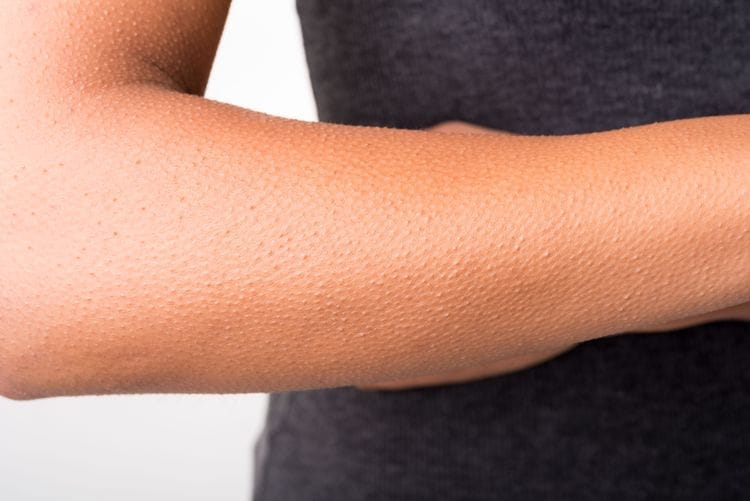
The Science of Goosebumps—Why We Still Get Them

The Science of Goosebumps—Why We Still Get Them

Ever wonder why you get goosebumps when you’re cold, scared, or moved by a powerful song? It’s all thanks to a primitive reflex known as piloerection.

Goosebumps happen when tiny muscles at the base of hair follicles contract, causing the hair to stand up. For animals with fur, this reaction makes them look bigger to scare predators or retain heat. Though humans have far less body hair, we’ve kept this reflex through evolution.

Interestingly, emotional triggers can also activate goosebumps, especially when experiencing music, nostalgia, or awe. It’s a physical response that links us to our ancient past—and to powerful feelings in the present.


Related Content

Terms and ConditionsDo Not Sell or Share My Personal InformationPrivacy PolicyPrivacy NoticeAccessibility NoticeUnsubscribe
Copyright © 2025 Fun Fact Feed