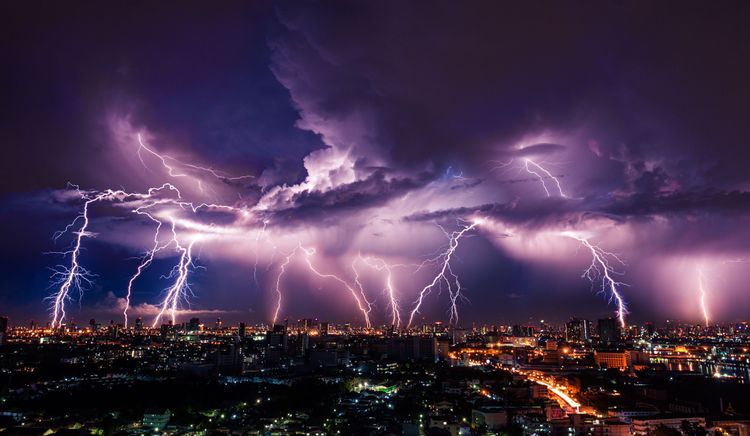
"Lightning never strikes the same place twice" is one of the most repeated sayings in the English language, and it's completely false. Lightning actually loves to strike the same locations over and over again.
The Empire State Building gets struckby lightningabout 100 times every year. Some tall structures get hit multiple times during single storms. Lightning is actually incredibly predictable - it follows the same paths and targets the same objects repeatedly.
The myth persists because people assume lightning is random, butit actually follows strict physical laws. Lightning seeks the path of least resistance to the ground, which means tall objects, metal structures, and high points get struck consistently.
What makes this myth dangerous is that it gives people false confidence. Golf courses, beaches, and hiking trails have regular lightning strike zones that get hit season after season. People assume they're safe in previously struck areas when they're actually in the highest-risk locations.
Lightning rods work precisely because lightning does strike the same places repeatedly. Benjamin Franklin designed his lightning rod system knowing that lightning would return to the same buildingsduringfuture storms.
Some locations are so prone to repeated lightning strikes that they're famous for it. Lake Maracaibo in Venezuela gets lightning strikes almost 300 nights per yearinthe exact same areas. The pattern is so predictable that it's called "Catatumbo Lightning" and happens like clockwork.
Weather researchers can predict with accuracy where lightning will strike based on topography, elevation, and atmospheric conditions. The same ridges, towers, and open areas get targeted repeatedly.
The saying should actually be "lightning always strikesthe same place twice" because that's much closer to the scientific reality. Once a location has ideal conditions for lightning strikes, those conditions don't change.
That comforting old sayinghasprobably caused morelightning injuriesthanit's preventedbygiving peoplefalse securityaboutreturning topreviously struck areas.