
Fun Facts

Recent Content

The First Ball Drop Almost Killed People

The First Ball Drop Almost Killed People

The 1907 Times Square ball was 700 pounds of iron and wood. It nearly fell during the first drop, almost killing the crowd below.

Read more
How January 1st Became New Year's Day

How January 1st Became New Year's Day

Julius Caesar picked January 1st as New Year's Day in 46 BC. Before that, the new year was March 1st—which is why our month names don't make sense.

Read more
Why Boxing Day Is Called Boxing Day

Why Boxing Day Is Called Boxing Day

Boxing Day started as the one day British servants got off after working Christmas. They received boxes of leftovers and tips from their employers.

Read more
Christmas Trees Started as Pagan Worship of Odin

Christmas Trees Started as Pagan Worship of Odin

Decorating evergreen trees at winter originated with Germanic tribes honoring Odin.

Read more
Santa Claus Did Not Always Wear Red

Santa Claus Did Not Always Wear Red

Before Coca-Cola's marketing campaign, Santa was depicted in blue, green, and purple across different cultures.

Read more
See All Content
logo
  • Sports

  • History

  • Language

  • Food

  • Tech

  • Animals

  • Sports

  • History

  • Language

  • Food

  • Tech

  • Animals

  • ​
    ​

The Extinct Animal That's Coming Back From the Dead

The Extinct Animal That's Coming Back From the Dead

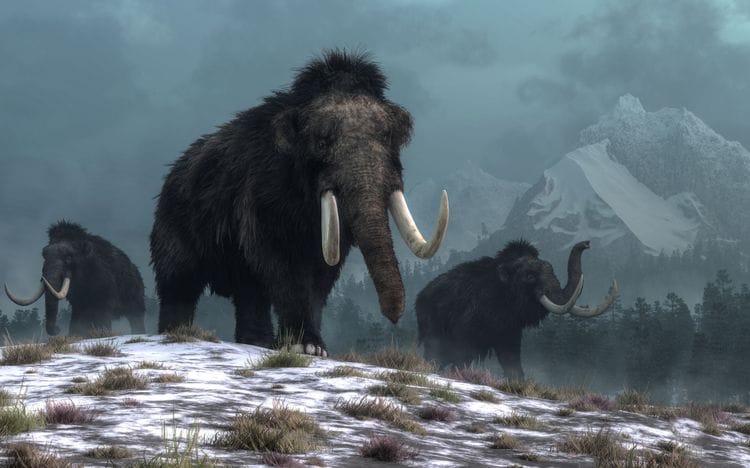
The woolly mammoth has been extinct for 4,000 years, but you might see one ALIVE within the next five years! Scientists have successfully created mammoth-elephant hybrid embryos using CRISPR gene editing and preserved mammoth DNA.

Colossal Biosciences has inserted mammoth genes for cold tolerance, fur density, and fat storage into Asian elephant DNA. The result is a creature that's 99.6% mammoth genetics but can be carried by an elephant surrogate mother.

The first "mammophants" are expected to be born in 2028. These creatures will look, act, and survive like mammoths but will technically be genetically modified elephants with mammoth characteristics.

The goal isn't just scientific curiosity—these mammoth-like creatures could help combat climate change by restoring grasslands in the Arctic tundra. Their grazing patterns could prevent permafrost melting that releases massive amounts of greenhouse gases.

Other de-extinction projects are already further along: the Tasmanian tiger might return by 2027, and passenger pigeons could fill American skies again by 2030.

We're not just witnessing the return of extinct species—we're participating in the reversal of extinction itself.

Related Content

Terms and ConditionsDo Not Sell or Share My Personal InformationPrivacy PolicyPrivacy NoticeAccessibility NoticeUnsubscribe
Copyright © 2025 Fun Fact Feed