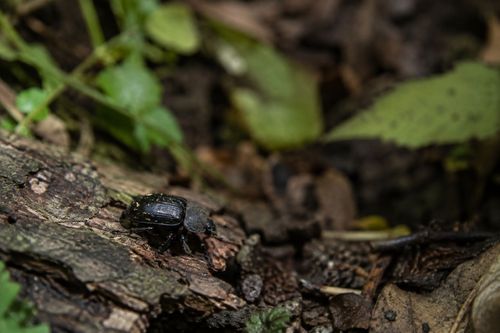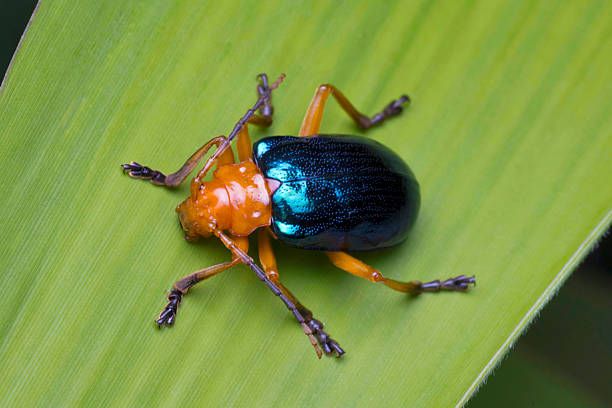
A toad snaps up a bombardier beetle in a single bite, swallowing it whole. Minutes later, that same toad violently vomits, and the beetle crawls away completely unharmed.
Scientists confirmed this happens far more often than anyone expected. In one study, 43% of bombardier beetles swallowed by toads were vomited back out alive, some surviving inside the toad's stomach for well over an hour before escaping.
The beetle's survival trick comes down to a genuine chemical explosion. It mixes two separate chemicals inside a reinforced internal chamber, triggering a reaction that boils the liquid to nearly 212°F almost instantly.
That reaction alone would be dangerous enough. Researchers using high-speed X-ray imaging discovered the beetle fires this scalding spray in rapid pulses, up to 500 bursts per second, rather than one continuous stream.
The pulsing isn't just for show. It's the exact mechanism that keeps the beetle from cooking itself alive, allowing the chemical reaction to build and release in controlled bursts instead of one sustained blast.
The beetle can also aim with real precision. It can rotate the tip of its abdomen up to 270 degrees, allowing it to target an attacker from almost any angle, including from deep inside a predator's own stomach.
Even Charles Darwin experienced this firsthand. He once wrote about accidentally holding a bombardier beetle in his mouth while collecting specimens, and getting an unpleasant firsthand demonstration of exactly what it can do.