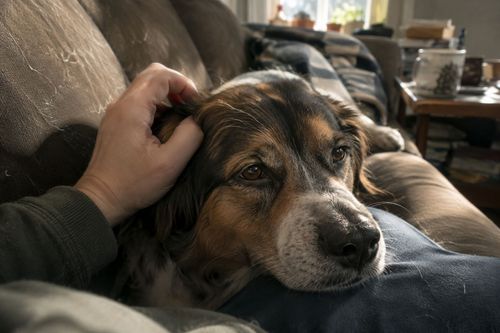
When two dogs share a home for years, they build routines that look almost like a marriage. They sleep in the same spots, eat on the same schedule, and greet each other every single day.
So when one of them dies, owners often notice the survivor acting off almost immediately. A 2022 Italian study surveyed over 400 dog owners who had lost a pet from a multi-dog household and found striking patterns.
Roughly 86% of surviving dogs showed behavioral changes after their companion's death, according to the survey. Many stopped eating as much, some became clingier toward their humans, and others slept far more than usual.
What made the findings stand out wasn't just that dogs reacted, it was how closely their grief mirrored the human owner's own sadness. Dogs whose owners grieved more intensely showed more dramatic behavior shifts themselves, suggesting some kind of emotional contagion at play.
Researchers can't say for certain that dogs understand death the way people do. But the pattern of reduced appetite, playfulness, and activity level looks a lot like sadness in any species we'd call grieving.
Some surviving dogs searched the house repeatedly, checking familiar spots where their companion used to rest or wait for meals. That searching behavior faded gradually over weeks, not days, in many of the cases reported.
It turns out the bond between two dogs sharing a couch might run deeper than we ever gave them credit for. Their loyalty doesn't end when the leash comes off for the last time.